Hotel Digital Marketing
What Is Hotel Marketing? Why It Matters for Bookings and Revenue (2026 Update)
Hotel marketing in 2026 explained: guests, channels, pricing and measuring net revenue, with a starting plan for small, independent hotels in Thailand.
In this article
How has hotel marketing changed in 2026?
The principles are the same, but where guests start looking has shifted sharply. SiteMinder's Changing Traveller Report 2026, a survey of 12,000 travellers in 14 countries including Thailand, found that OTAs are now the top starting point at 26%, overtaking search engines, which fell to 21%. Recommendations from friends and family rose to 14%, and starting from a familiar hotel brand rose to 7%. AI is the starting point for only 4% of travellers — but that is up from 1% the year before.
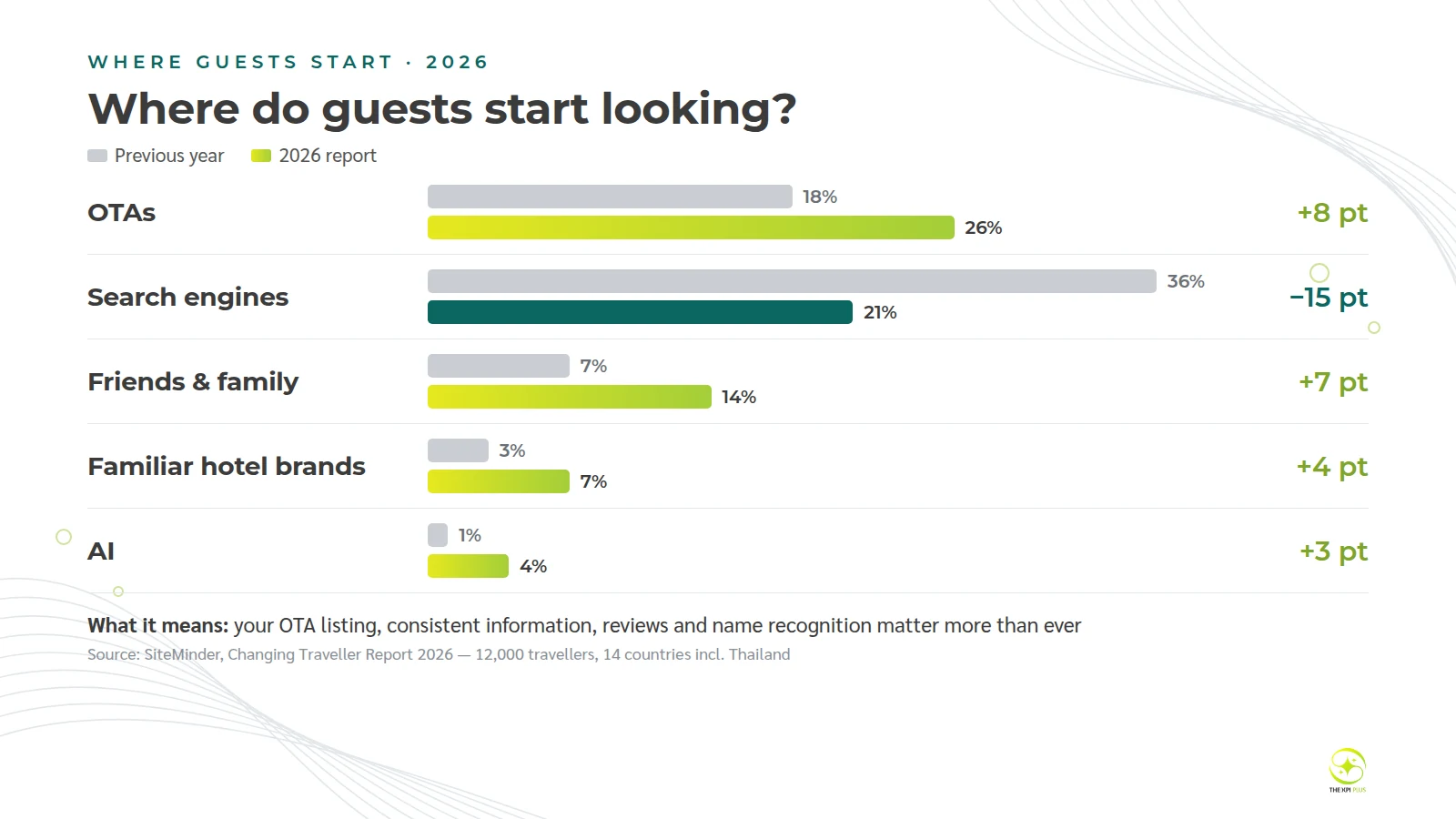
At the same time, search engines increasingly summarise a hotel's website, Google Business Profile and reviews before anyone clicks, and since 27 August 2026 Google has let users in the United States book hotels inside AI Mode. Meanwhile, international arrivals to Thailand from January to 19 September 2026 were 3.67% lower than a year earlier. What this means for hotels: your OTA listing, consistent information across channels, your reviews and whether guests remember your name all matter more than before — and with overall demand flat, measuring results down to net revenue is essential.
How is hotel marketing different from advertising?
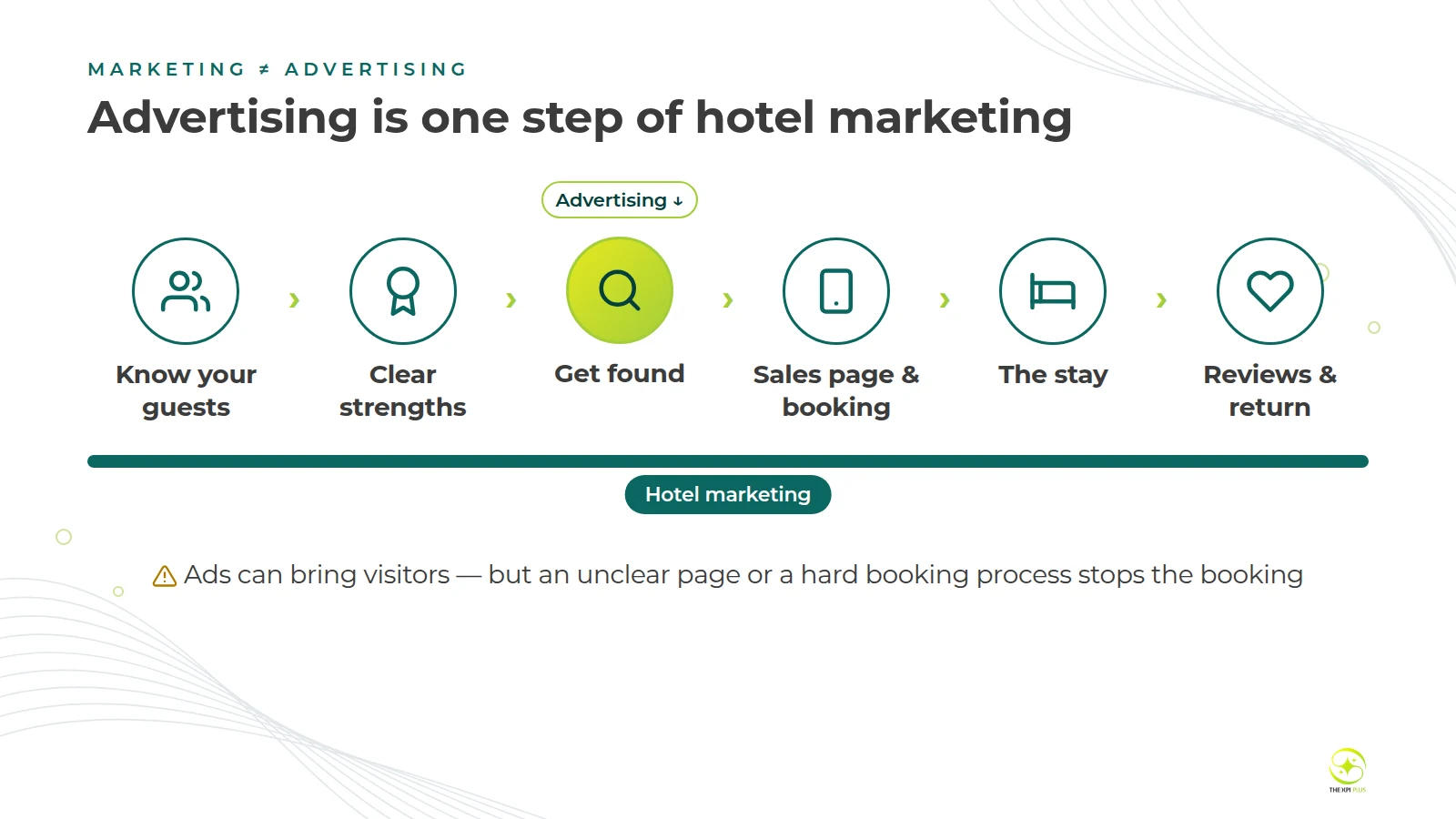
Advertising is one part of hotel marketing. Marketing starts before you buy any media and continues after the guest clicks. A hotel might run ads to a web page with unclear room photos, no location details and a clumsy booking process. The ads bring visitors, but the bookings don't follow.
A hotel marketing plan should answer at least five questions:
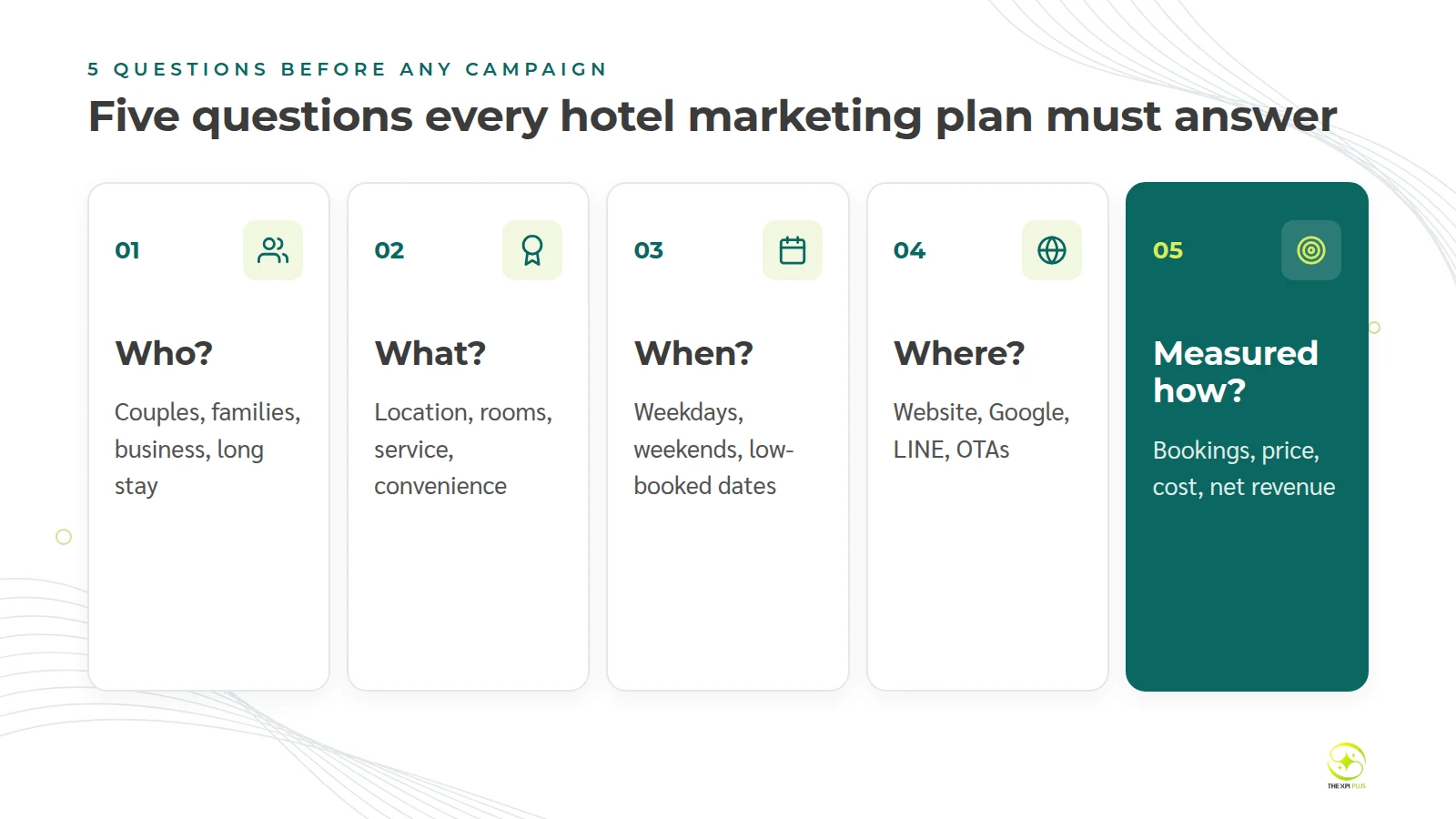
1. Who: couples, families, business travellers or long-stay guests?
2. What: which strengths do guests genuinely value — location, experience, rooms, service or ease of travel?
3. When: weekdays, weekends, peak season, or the periods where bookings are still low?
4. Where: your website, Google Maps, social media, LINE, OTAs or tour operators?
5. How you'll measure it: bookings, average selling price, cost per booking and the revenue left after channel costs?
Once you have the answers, you can decide whether to improve your website, create content, increase your visibility on Google, launch an offer for specific nights, or buy advertising.
Why does hotel marketing matter?
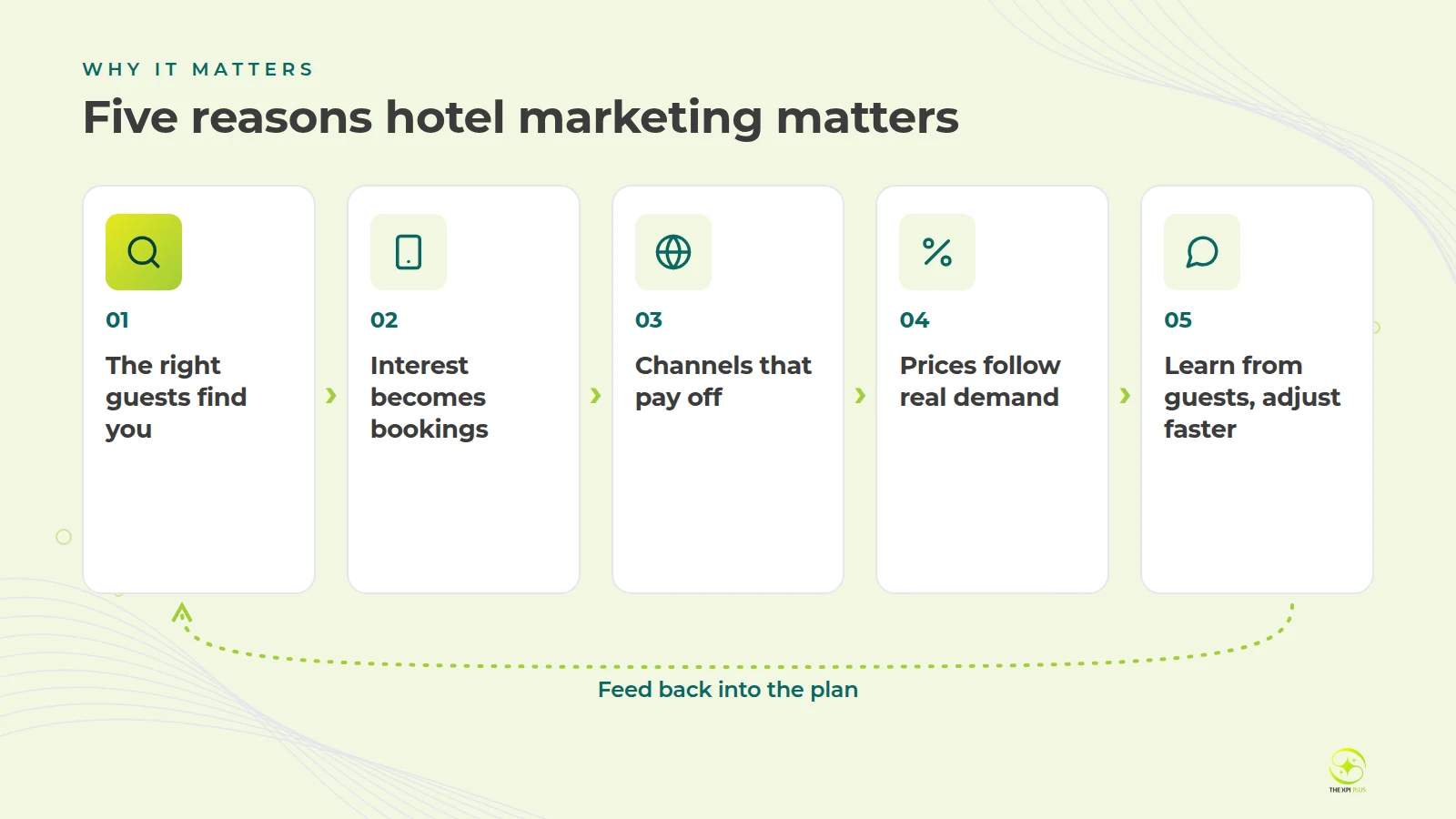
Hotel marketing matters because it shapes five things that drive bookings and revenue, from being found by the right guests to learning from them to improve the plan.
01
The right guests can find you
Guests may start with an area, a type of stay or a specific need, such as a hotel near Phuket airport or a family-friendly place in Patong. Today, questions like these are often answered with a summary written by the search engine. If your information on your website, Google Business Profile and sales channels is unclear or inconsistent, guests may not find you — or may find you and still not feel confident enough to book.
Good communication states your location, room types, facilities, key conditions and strengths plainly, with real photos that help guests decide.
02
Interest turns into bookings
Being seen is only the start. After looking at your hotel, guests need to answer two questions for themselves: "Is this right for me?" and "How do I book?" A good website or sales page is easy to read on a phone, makes rooms and prices clear, and has a simple way to book or get in touch.
If many people view your hotel but few book, the problem may be the photos, room information, price, trust signals or the booking process. More ad spend is not always the first fix.
03
You can choose channels that pay off
OTAs — online travel agencies — give hotels access to a large number of people searching for somewhere to stay, and they are now where many guests start. But every channel has different costs and conditions. Your own website supports direct bookings and a direct relationship with guests. SiteMinder's report found that around 18% of travellers who start on an OTA end up booking directly with the hotel.
You don't have to choose just one channel. Look at which channels bring guests on the nights you need to fill, which sell at the right price, and what the return looks like after commission and advertising.
04
Prices and offers follow real demand
Cutting prices every time bookings slow down may sell more rooms, but revenue per room and profit can fall. Before launching a promotion, look at new bookings coming in for each night, how far ahead guests book, competitor prices and how many rooms you still have.
Example: If Saturdays already sell well but Sunday nights have plenty of empty rooms, a hotel could test a two-night package with a benefit for the Sunday night, instead of discounting Saturday across the hotel — then check how total and net revenue change.
05
You learn from guests and adjust faster
Guest questions, reviews, reasons for cancellation and sales data by channel show both your strengths and what stops people from booking. If guests keep asking about parking, make that information easy to find. If a room type gets plenty of views but few bookings, check its photos, description and price difference. Reviews are also what OTAs and search engines now use to summarise who your hotel is right for.
How should a small hotel get started?
You don't need a big campaign. Start with steps your team can actually do:
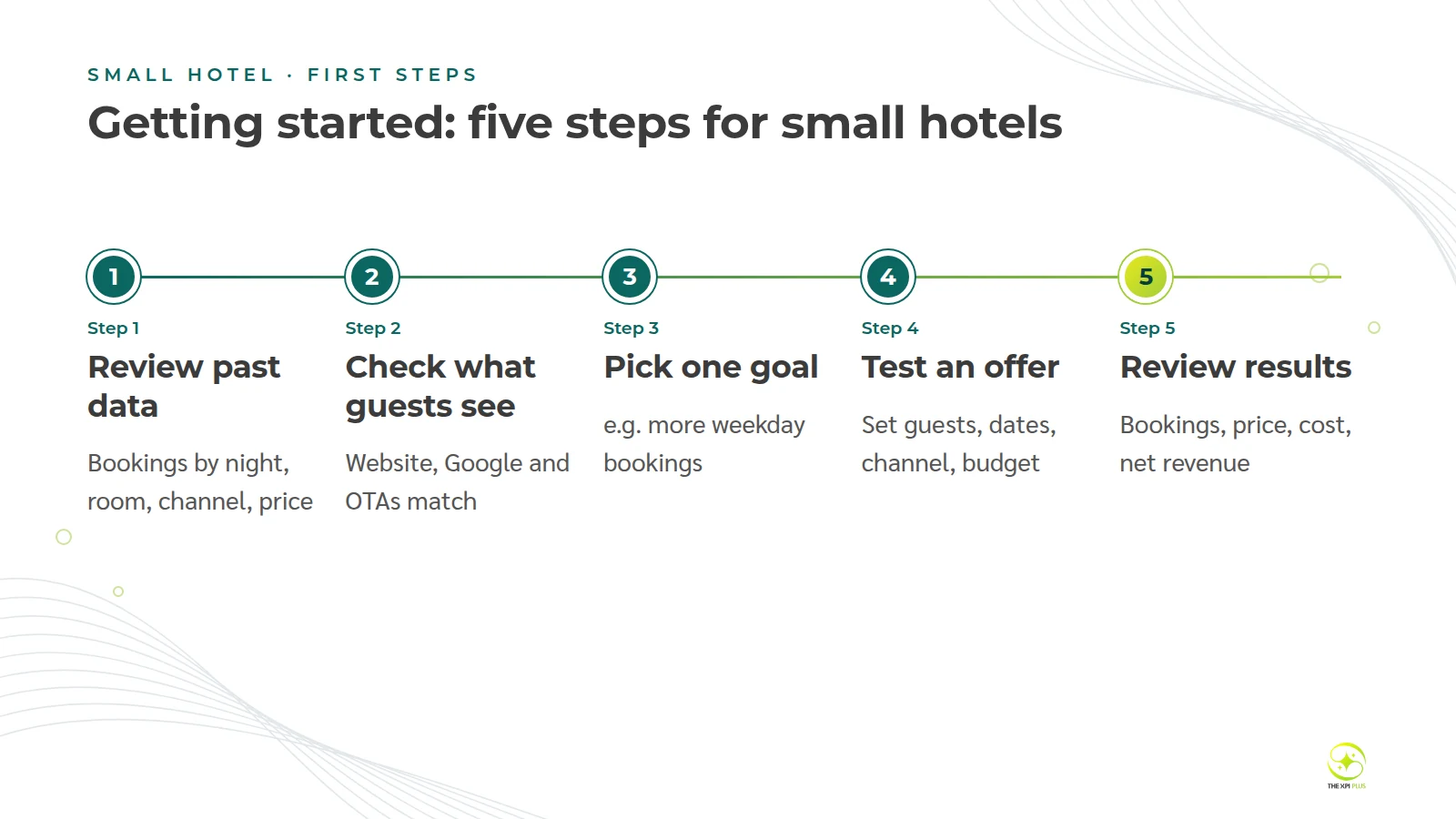
1. Review past data: split bookings by stay date, room type, channel and selling price to find the nights that are hard to sell and the guests you actually have.
2. Check what guests see: make sure information and photos on your website, Google Business Profile and OTAs match, are up to date and answer pre-booking questions.
3. Pick one goal first: for example, more weekday bookings, more direct bookings, or a higher average price in high-demand periods.
4. Test a measurable offer: define the guests, dates, channels, budget and the result you want to see before the promotion starts.
5. Review results regularly: look at bookings, selling price, channel costs and net revenue, then adjust the plan based on the data.
Example: A 20-room hotel finds it has many empty rooms from Sunday to Thursday nights. The team could first check which guests stay on those nights, adjust the sales page for that group, then test an offer only on the nights it wants to fill. After the campaign, compare the results with a similar period, looking at price and cost together. This is a planning example, not a result from any client.
Which numbers should you use to measure hotel marketing?
| Metric | What it tells you | Read it together with |
|---|---|---|
| Occupancy | Share of available rooms that were sold | Average selling price and stay dates |
| Average daily rate (ADR) | Average room revenue per room sold | Occupancy |
| Revenue per available room (RevPAR) | Room revenue relative to the rooms you had to sell | Channel costs and profit |
| Booking mix by channel | Where guests booked | Commission, advertising and each channel's conditions |
| Visitor-to-booking conversion | How many people who viewed your website or listing went on to book | Traffic source and booking process |
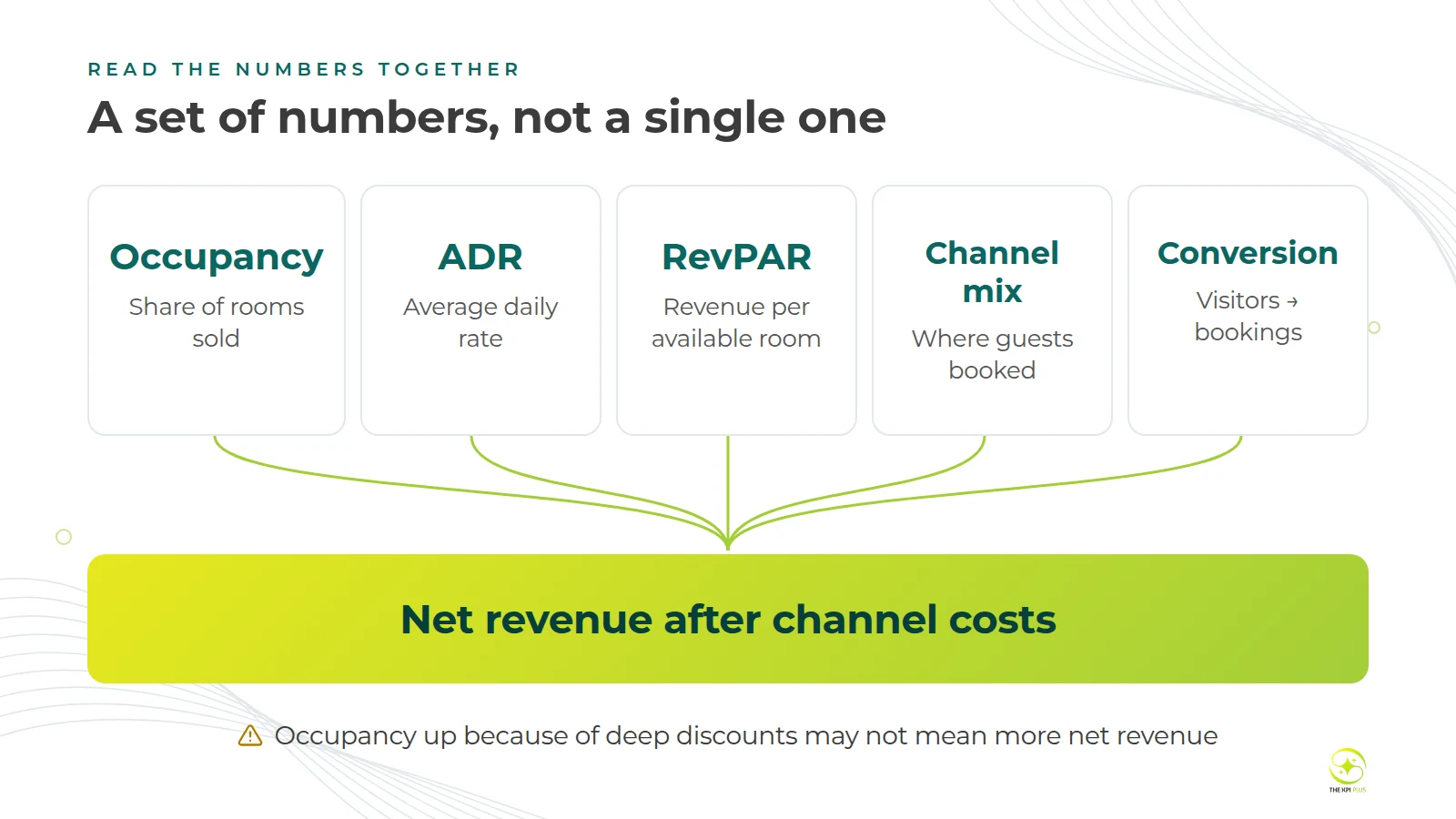
No single number tells the whole story. If occupancy rises because of deep discounts, net revenue may not increase at all. Read the numbers as a set and compare them with your goal for that period.
Frequently asked questions
Does a hotel need to be on every social media platform?
No. Choose the platforms your target guests actually use and that your team can keep up with. Complete room information, reviews, quick answers to questions and an easy way to book often matter more than several accounts nobody has time to run.
If we already sell on OTAs, do we still need a hotel website?
Yes. Many guests find a hotel on an OTA and then search for its name before deciding. Your website explains your strengths, conditions and direct-booking offer clearly. It works alongside OTAs rather than replacing them.
How do we know if our marketing budget is worth it?
Decide up front which bookings or revenue you will attribute to each activity, track the related costs, and compare results after commission, advertising and other costs. If you cannot track every booking source, say so and combine several data sources rather than judging on website visits alone.
Will AI change hotel marketing?
It changes how guests search and compare, not the fundamentals. AI tools summarise information from your website, Google Business Profile, OTA pages and reviews, so hotels with complete, accurate and consistent information benefit most. Only a small share of travellers start their search with AI today, so there is no need to spend heavily on specialised tools.
Summary
Hotel marketing connects the right guests, the right offer, the right price and the right channels to produce bookings that are worth it for the business. In 2026, as more guests start on OTAs, through word of mouth and with search-engine summaries, hotels make better decisions when they treat marketing together with revenue management and costs — not as a separate job of posting and running ads.
If you'd like to start by checking which channels your rooms are selling through, how your prices look and where the plan could improve, request a Hotel Performance Audit with The KPI Plus team. For help connecting marketing with pricing and channels, see revenue and commercial management and our hotel digital marketing overview.
Related reading: 10 Hotel Marketing Strategies and Hotel Marketing Plan 2027.