Hotel Marketing
Hotel Branding in 2026: How to Make Guests Remember You and Book with Confidence
Hotel branding for 2026: choose your guests, write a promise you can prove, keep every channel consistent, price to match, and use reviews to check the result.
In this article
Why hotel branding matters more in 2026
SiteMinder's Changing Traveller Report 2026, which surveyed 12,000 travellers in 14 countries including Thailand, found a clear shift in where guests start looking. OTAs became the top starting point at 26%, overtaking search engines, which fell from 36% to 21%. Recommendations from people they know rose from 7% to 14%, familiar hotel brands from 3% to 7%, and AI from 1% to 4%.
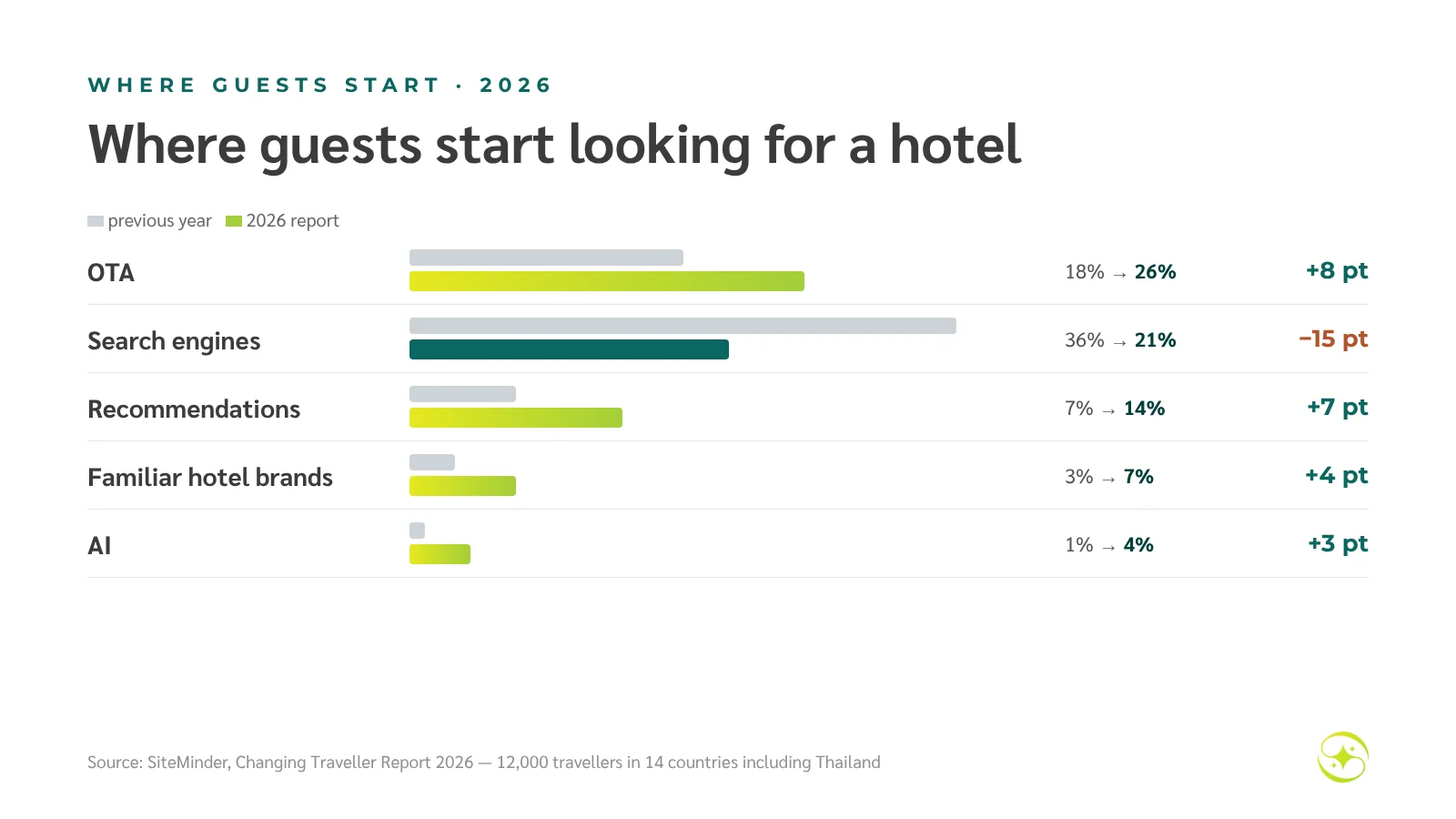
What this means for hotels: your OTA listing is often the first place guests meet your brand; word of mouth and name recognition are growing channels; and all of it comes from the experience guests actually had.
Meanwhile, Thailand's foreign arrivals from 1 January to 19 September 2026 were 3.67% below the previous year, according to the Ministry of Tourism and Sports. When overall demand isn't growing, hotels that give guests no reason to choose them other than price end up competing on discounts.
Hotel branding is more than a logo
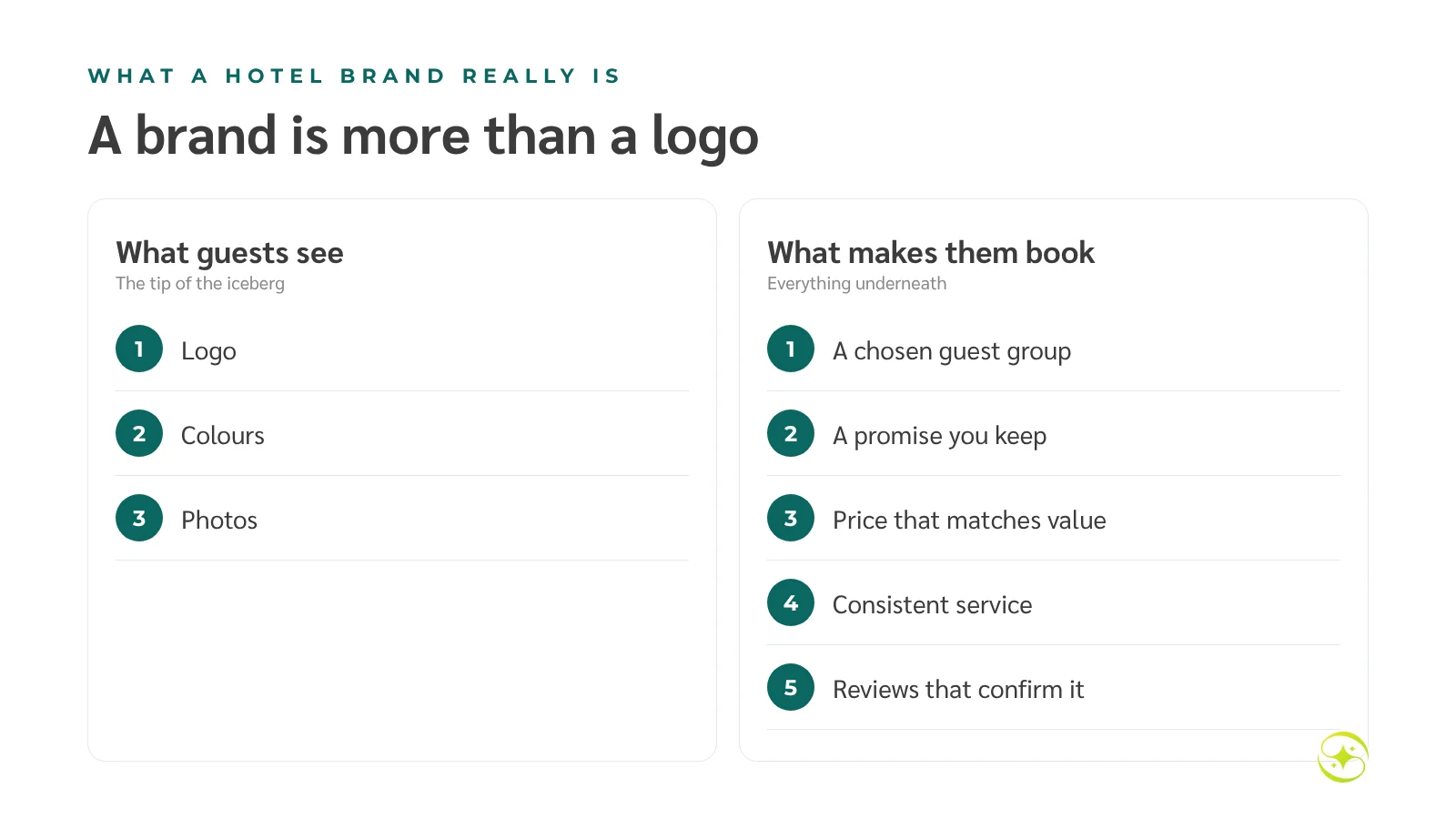
Logo, colours and photos are what people see first, but trust comes from what sits underneath: a clear choice of guests, a promise you can keep, pricing that matches value, consistent service, and reviews that confirm the promise.
1. Choose guests your hotel can genuinely serve well
Start with booking data and guest questions: who stays often, on which days, which rooms they choose, which countries or channels they come from, and what they like or dislike in reviews. One hotel can host several groups, but choosing a core group lets you design rooms, photos, information and service more precisely.
Don't pick a target only because it's popular. If you want to market to families, check that room sizes, beds, safety and service processes really support them. If your strength is quiet, check noise and house rules first.
Example: a question for your team — which guests rate our experience highly, and can we look after them consistently?
2. Write your brand promise as a sentence you can prove
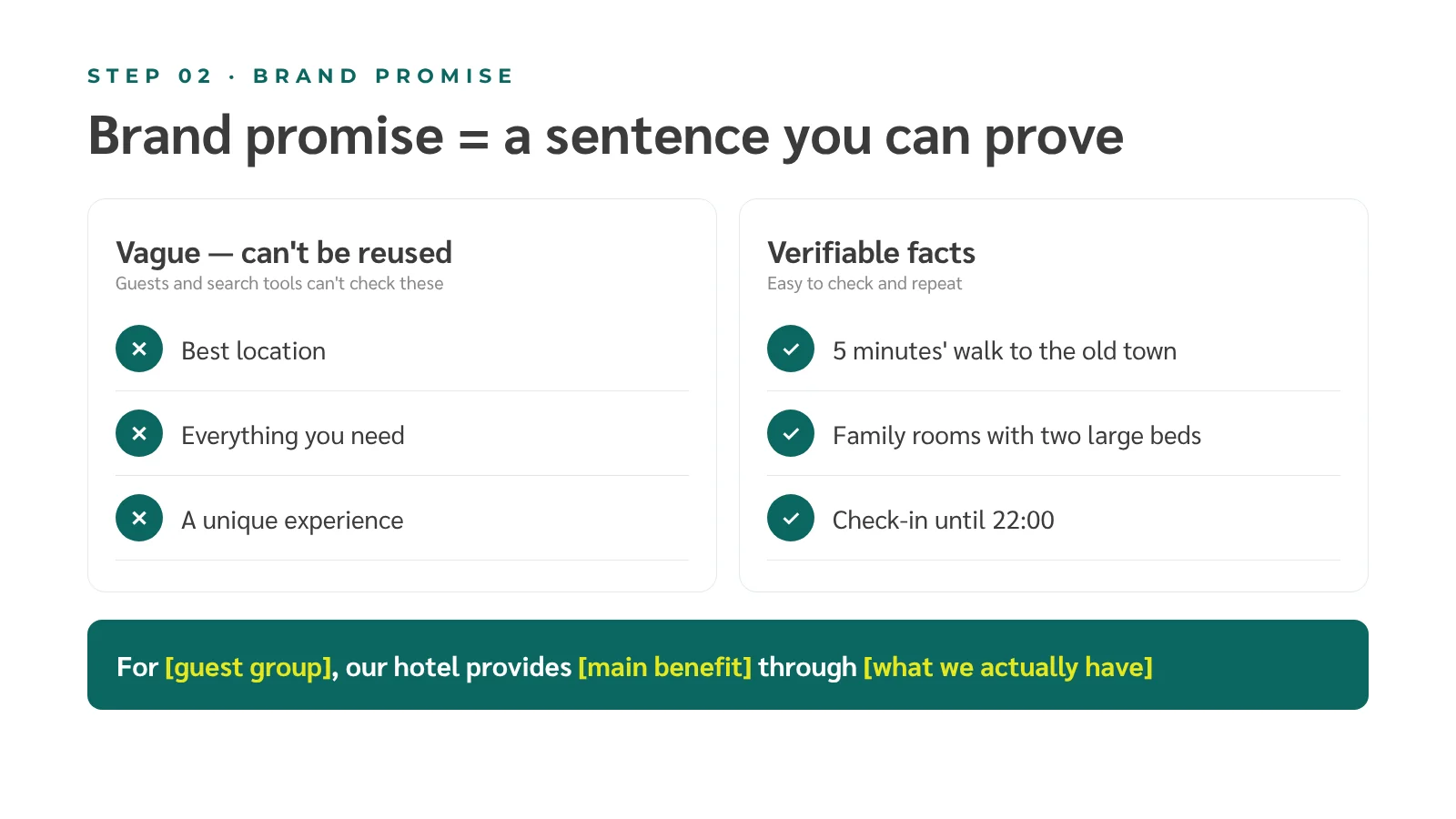
A brand promise is what guests should expect. It doesn't need to be a grand slogan. Use a simple frame: "For [guest group], our hotel provides [main benefit] through [what we actually have and do]."
Hypothetical example: "A stay for families who want to explore the old town easily, with connecting rooms and a team that helps plan walking routes." This only works if you truly have connecting rooms, the old town really is easy to reach, and staff actually help.
"The best" or "a unique experience" tells guests less than specific facts you can prove — and systems summarising hotels can't reuse vague claims. Facts like "5 minutes' walk to the old town" or "check-in until 22:00" are easier for guests to check and for search tools to repeat correctly.
3. Keep photos, words and information identical on every channel
Once you know what to say, set your name usage, tone, photography, colours and design to suit the hotel. Real photos should show what guests will get: room size, window light, common areas, views and real details.
Check your website, Google Business Profile, OTAs and social media together. Hotel name, location, room types, facilities and key limitations should match. If one channel says breakfast is included and another says it isn't, guests lose confidence immediately.
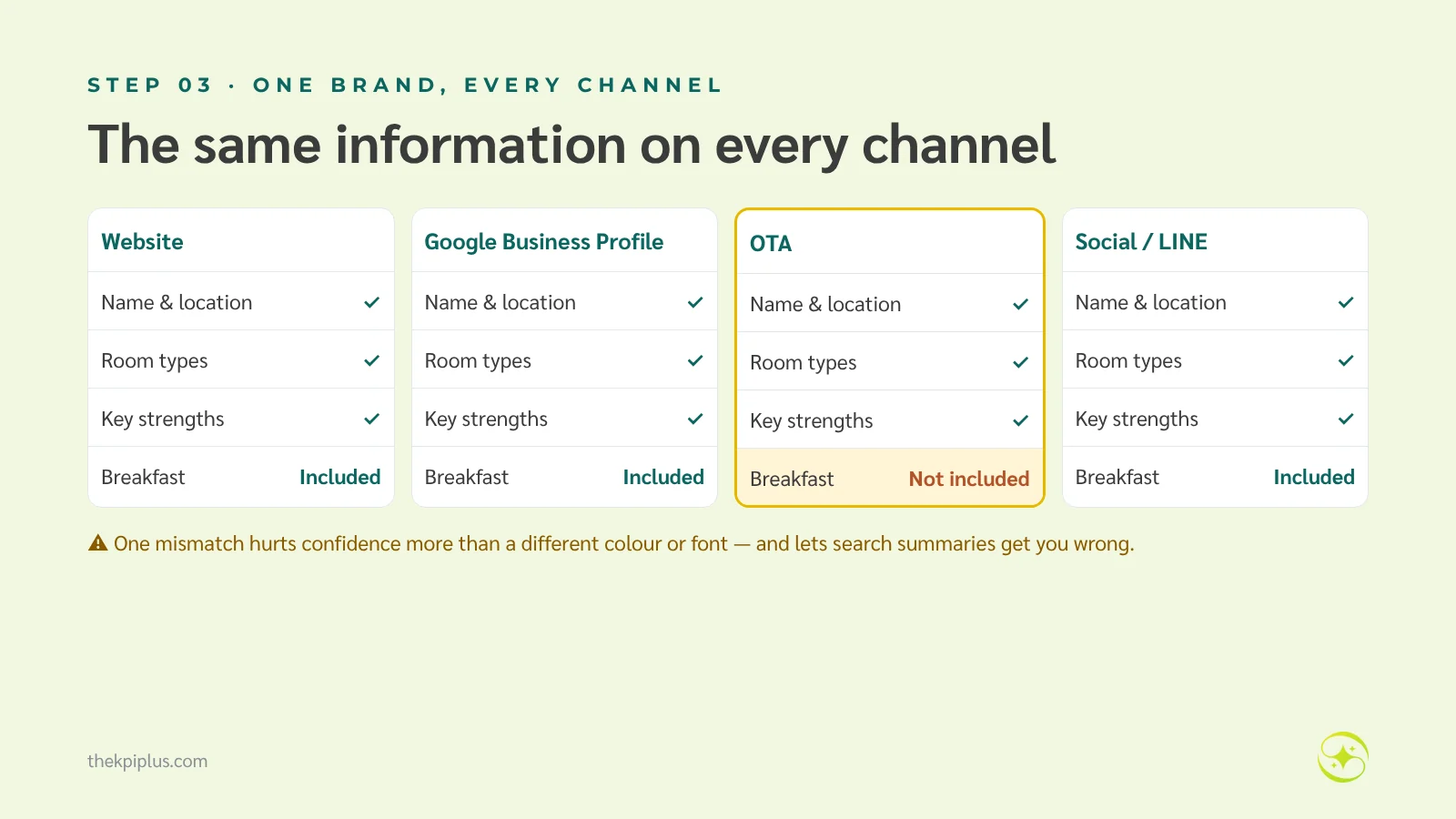
Example: a task to start today — choose the lead photo for each room type, write one short description used on every channel, remove claims the hotel can't stand behind, then search your hotel's name on a phone and read what Google and the OTAs say about you.
4. Design the experience from before booking to after check-out
A brand doesn't start at the check-in desk. Guests judge you when they see room information, ask questions on LINE or OTA chat, book and receive confirmation — then on arrival, in the room, in how you respond to problems and after they leave.
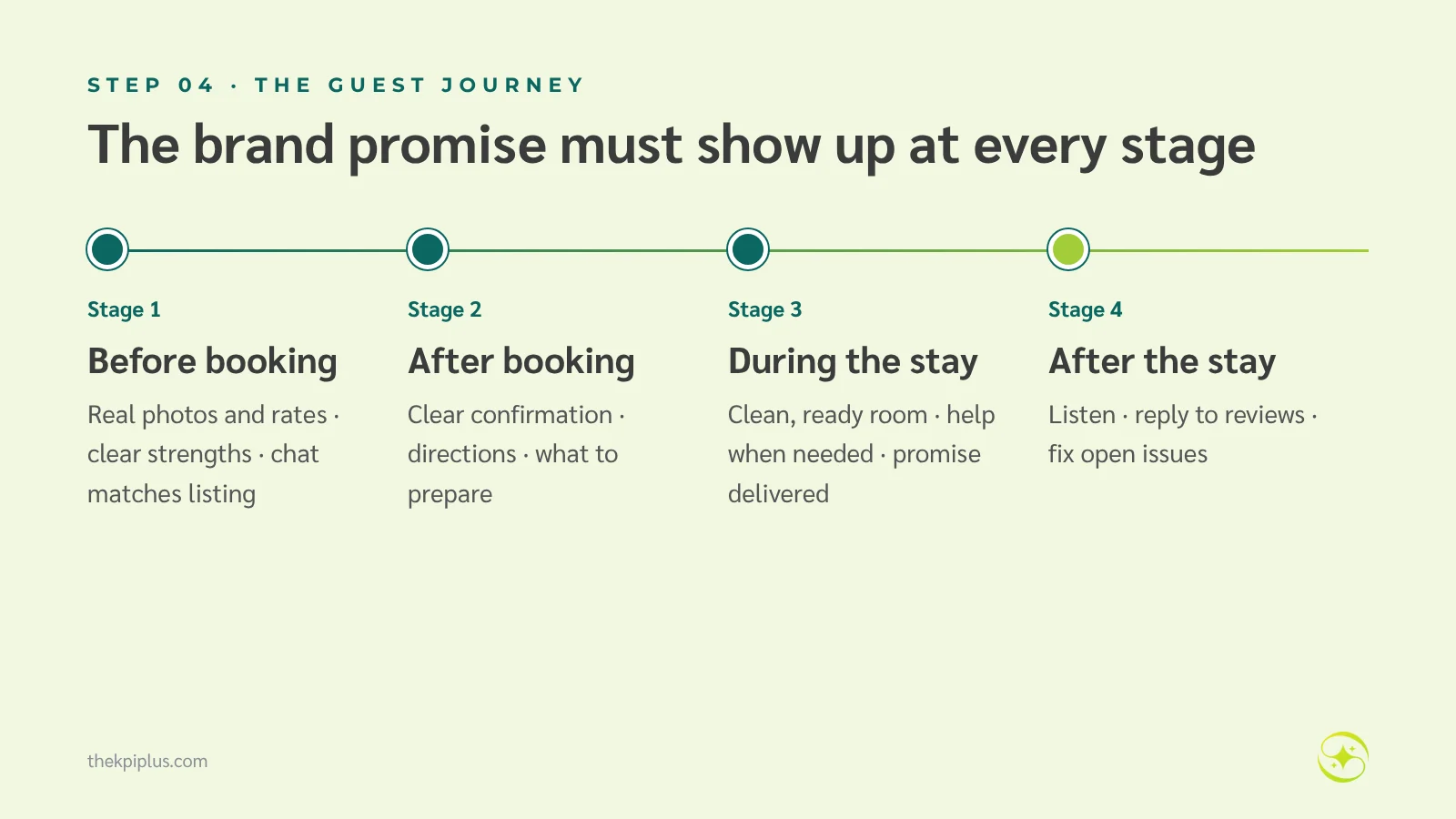
| Guest stage | What should match the brand |
|---|---|
| Before booking | Photos, rates, conditions, clear strengths, chat replies that match the listing |
| After booking | Confirmation, directions and what to prepare |
| During the stay | Cleanliness, room readiness and help when needed |
| After the stay | Listening to feedback, replying to reviews, fixing open issues |
You don't need something special at every step. Basics done reliably and consistent with what you promised are worth more than big promises kept only on some days. If you use automatic messages or reply-drafting tools, make sure they sound like your brand and give current information.
5. Let pricing and offers support your brand position
Price signals what guests should expect. If you say your rooms offer calm and attentive service but discount heavily all the time, guests may remember you mainly for price — or wonder whether your normal rate reflects real value.
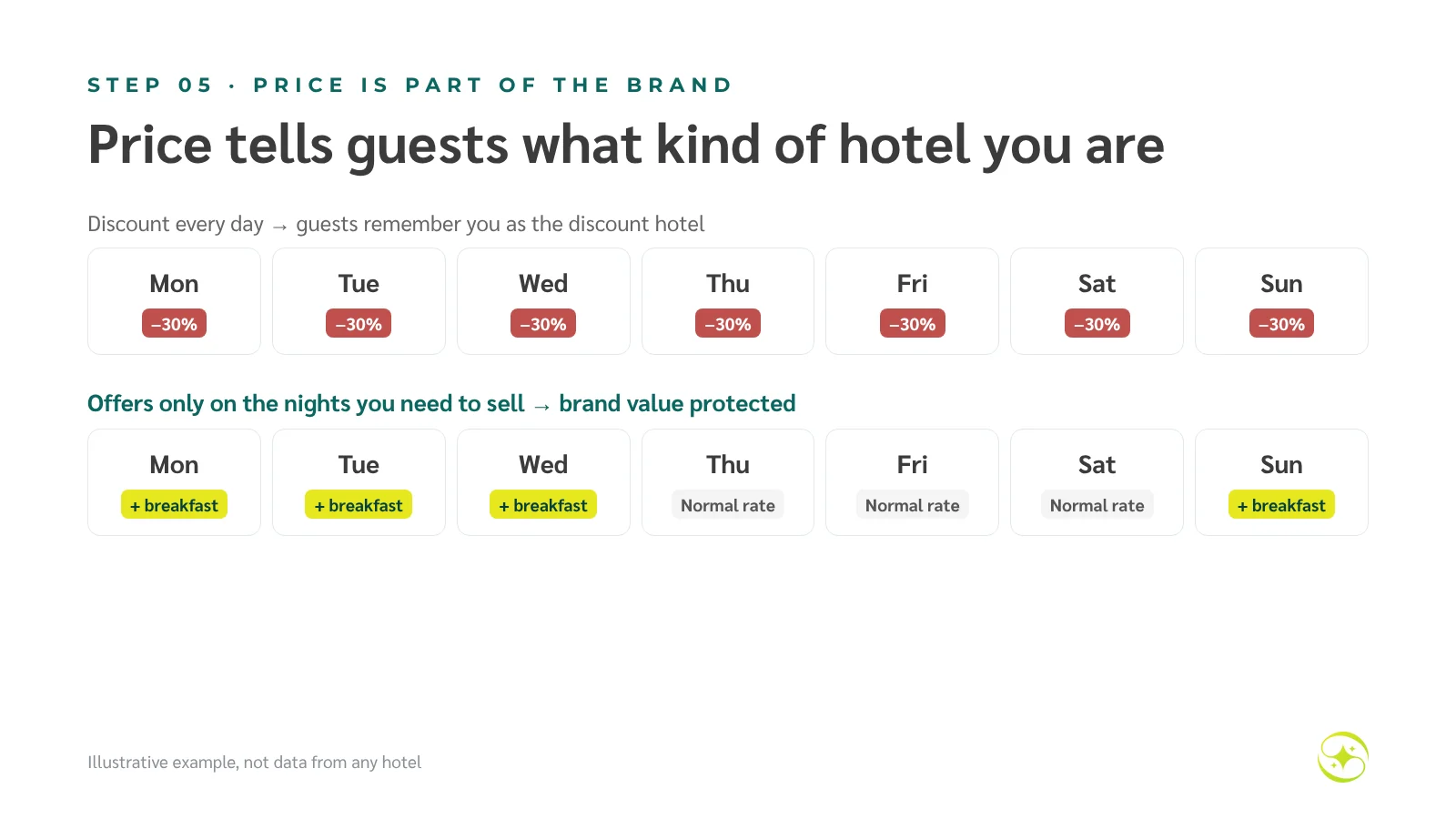
Instead, use targeted offers for the nights you need to fill, or added value that fits the brand — breakfast for families, late check-out for couples — and keep your normal rates on strong nights.
Numbers to watch: room nights sold, average daily rate (ADR) and revenue after discounts, commission and offer cost, by stay date.
6. Communicate your brand where guests decide
With OTAs now the top starting point, your OTA listing is as much your brand's shop window as your website. Use the same lead photos, descriptions and strengths as your website; the website should then answer room and booking questions in full and make direct booking easy.
Every channel should present the same strengths in a format that suits it: your website explains room details fully, a short post shows one room and one fact guests need, and your chat team answers in the same tone and with the same facts.
7. Use reviews and booking data to check your brand in practice
Reviews are no longer read one by one. Many OTAs and search engines use AI to summarise them in a few sentences, so whatever guests mention repeatedly becomes the description new guests see before yours.
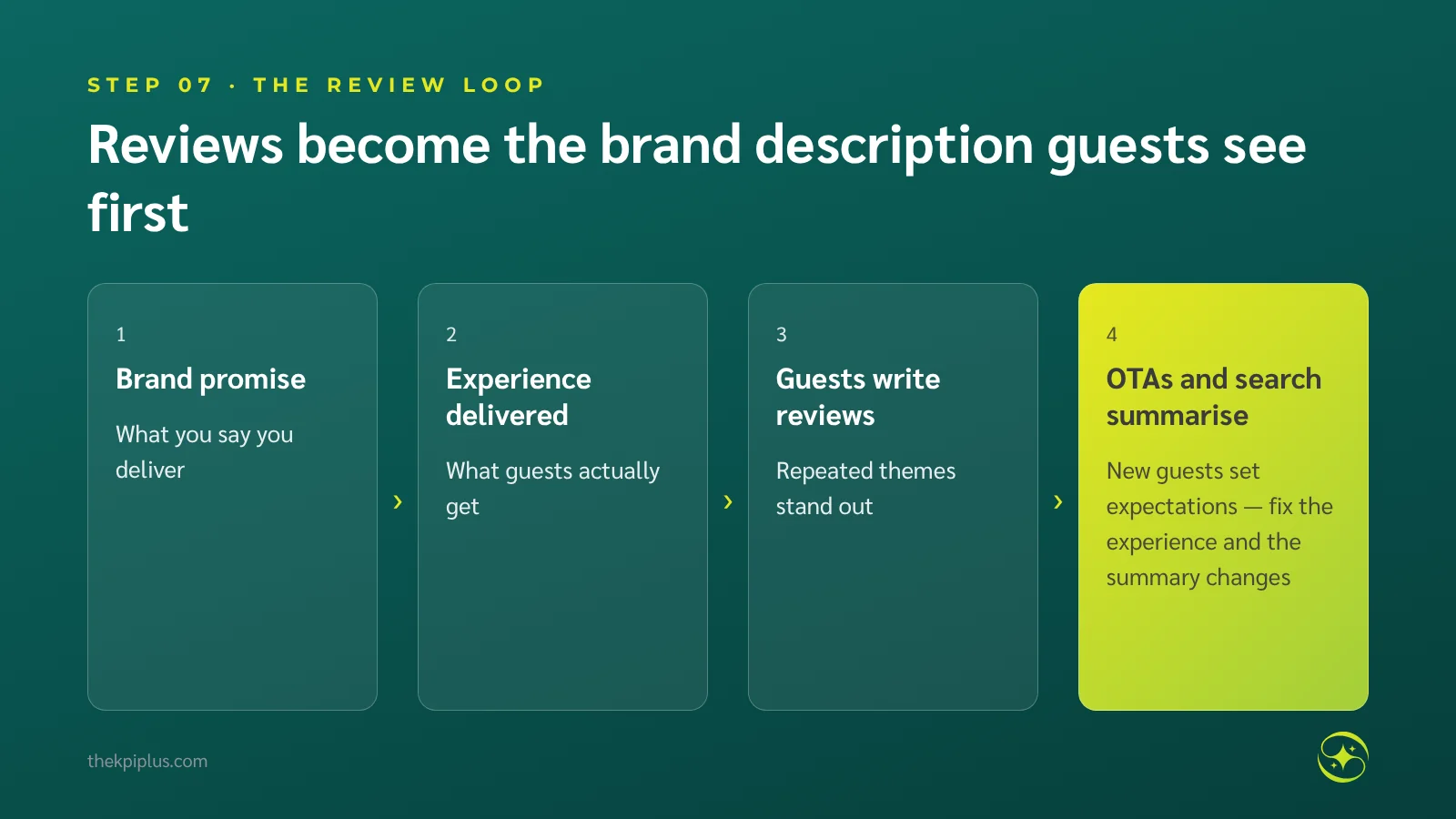
An owner may intend the brand to be "a calm place to rest", but if reviews keep mentioning noise, that's what new guests read. Read both praise and complaints, separate issues you can fix, and fix the experience before changing the words.
Look at booking data alongside: are your target guests actually booking, which rooms, through which channels, at what rates? Are more people searching your hotel's name? Do guests return or recommend you?
Numbers to watch: once a month, read new reviews and OTA review summaries, check searches for your hotel's name in Google Search Console or Business Profile, review bookings by guest group or channel, then choose one thing to improve.
Planning example: building a brand without changing the logo first
Imagine an 18-room hotel near an old-town district. Guests praise the walkability and staff recommendations, but the website and OTA listings use generic words like "luxury stay, fully equipped". The owner could start by rewriting descriptions around real strengths: "5 minutes' walk to the old town", "family rooms for four", "staff help plan walking routes".
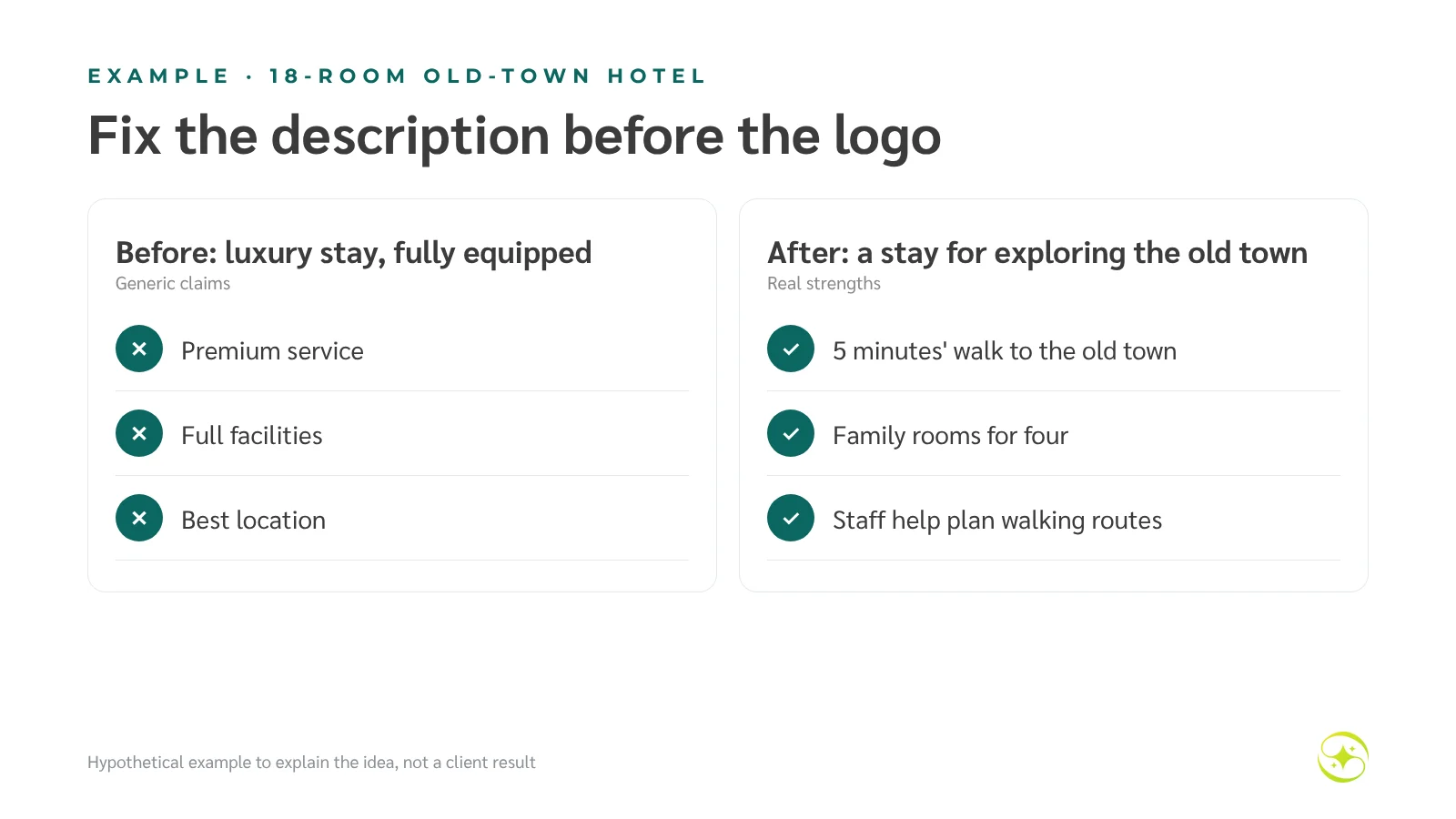
Then track whether questions about getting around fall, whether reviews and review summaries mention the intended strengths more often, and whether bookings from the target group rise. This is a planning example, not a result from any client.
Frequently asked questions
Does a hotel need a new logo before building its brand?
Not necessarily. If your current logo is clear and suits your identity, start with what guests use to decide: room information, real photos, your key selling points and the service experience. Consider a redesign once you know clearly who the hotel serves and what it promises.
Can a small hotel build a brand that competes with big chains?
Yes, in the markets and guest groups that suit it. Independent hotels have flexibility and local knowledge, but they need a selling point they truly deliver, service steps that repeat reliably and clear pre-booking information. You don't need to compete on every facility.
How do AI tools like Google AI Mode or ChatGPT affect hotel brands?
Few travellers start their search with AI yet, but AI-assisted search draws on your website, Google Business Profile, OTA pages and reviews to explain who you suit, and Google has started letting US users book hotels in AI Mode. Clear, consistent information and reviews that confirm your strengths help these summaries describe you correctly.
How do we know our hotel branding is working?
Look at several signals together: whether reviews mention the strengths you intend, whether your target guests actually book, searches for your hotel's name, direct booking share, repeat bookings, achieved rates and fewer questions caused by unclear information. One number alone can mislead.
Summary
Strong hotel branding comes from a clear promise and an experience delivered consistently. In 2026, as guests meet hotels through OTAs, word of mouth and review summaries, what you control is choosing the right guests, stating facts you can prove, keeping every channel consistent, pricing to support your position, and fixing the experience reviews point to.
To bring your brand to life on your website, see hotel website design; to align pricing and channels with your position, see revenue and commercial management. If you're reviewing whether your selling points, rates and channels fit the guests you want, request a Hotel Performance Audit with The KPI Plus.
Related reading: Hotel Review Management and Hotel Website Content.