Hotel Marketing
Small Hotel Marketing: 7 Ways to Run and Market a Small Hotel with a Small Team (2026 Update)
Small hotel marketing for properties with few rooms and a small team: a clear selling point, consistent listings, night-by-night offers, replies and reviews.
In this article
Late 2026: three things small hotels should know
The international market isn't growing. From 1 January to 19 September 2026, Thailand received 22,183,678 foreign visitors, down 3.67% year on year, according to Ministry of Tourism and Sports figures reported by Nation Thailand. When overall demand isn't rising, a small hotel must protect its rate on busy nights and use targeted offers on the nights that stay empty, rather than discounting the whole month.
The tourist visa exemption fell to 30 days. From 15 September 2026, passport holders from 60 countries and territories can stay visa-free for up to 30 days instead of 60, according to TAT. Many small properties rely on long-stay guests in low season, so check how your long-stay bookings are affected.
Hotel search is moving into AI. Since 27 August 2026, Google has let US users search for and book hotels in AI Mode, starting with large chains and OTAs, Skift reported. Small Thai hotels aren't directly affected yet, but it's a signal that complete, consistent information across every channel will increasingly decide who gets recommended.
What this means for hotels: this isn't the year to spend more on every channel. The biggest wins for a small hotel are not leaving sellable nights empty and not underpricing the nights that sell themselves.
Before you start: look at your hotel three ways
Open your past data and what's on the books for the coming weeks, and note short answers to three questions. Your answers tell you whether to start with marketing, pricing or how the team works.
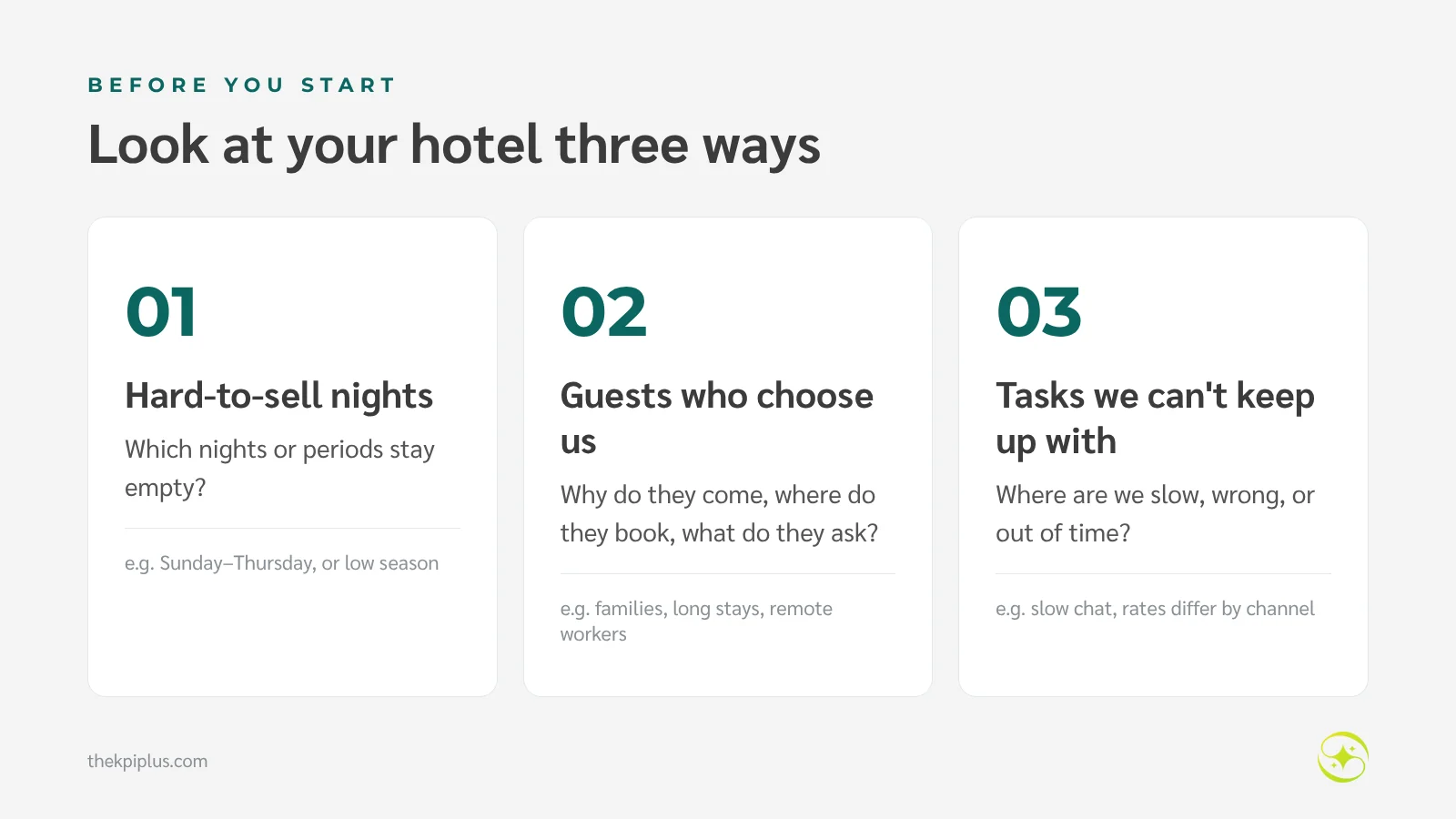
1. Hard-to-sell nights: weekdays, Sundays, or which periods stay empty?
2. Guests who choose us: why do they come, where do they book, what do they ask before deciding?
3. Tasks the team can't keep up with: slow replies, rates that differ between channels, no time to update listings?
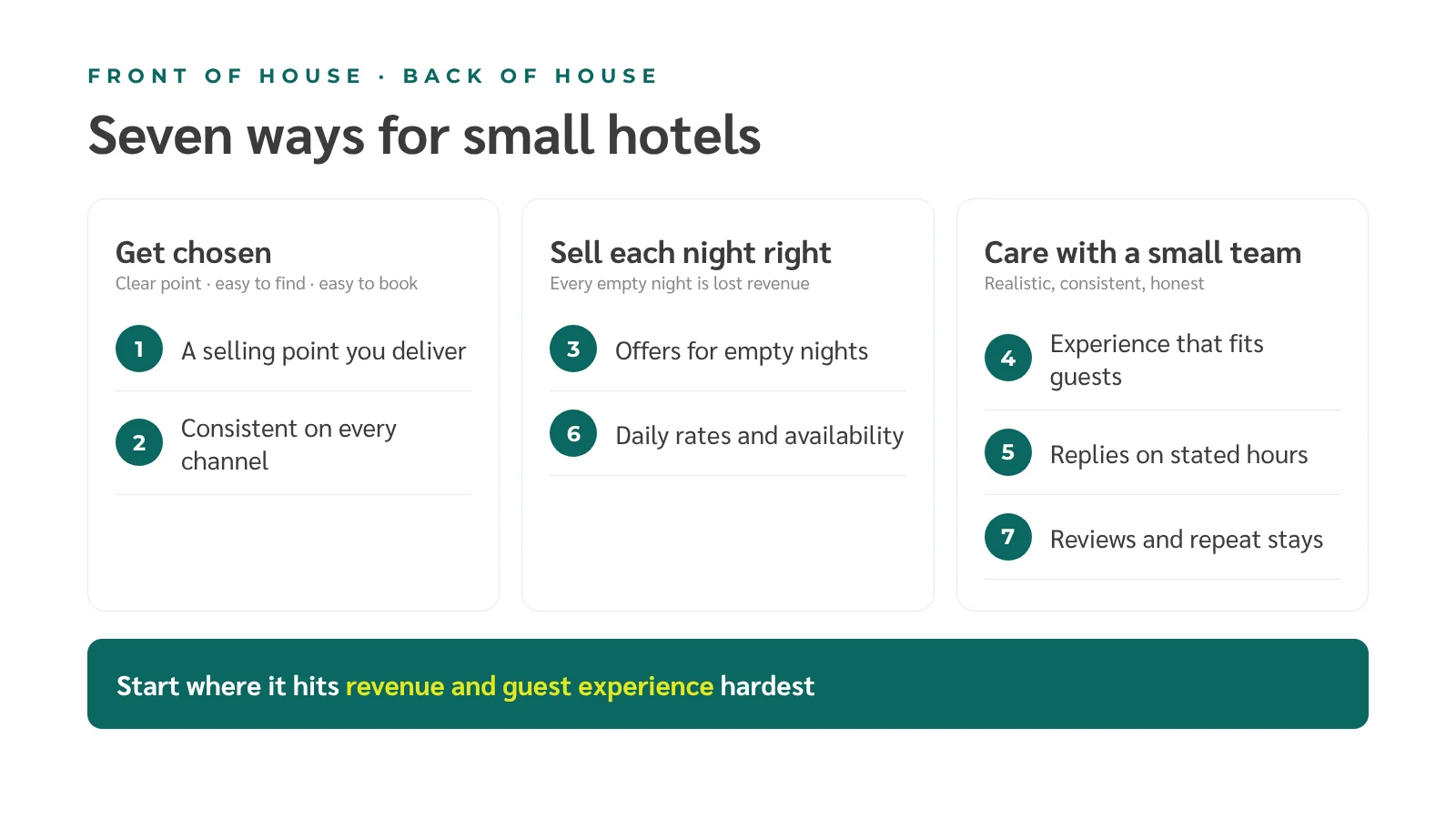
The seven ways below fall into three groups: helping guests choose you, selling each night at the right price, and looking after guests with a small team.
1. Choose a selling point guests value — and you can deliver
A small hotel doesn't need the facilities of a large resort, but it does need to say clearly who it suits and how it makes the trip better: family rooms, a walkable location, quiet, local knowledge, or genuinely pet-friendly rooms within your rules.
Pick one or two core guest groups and compare what they need with what you offer. If you're near the beach with several room sizes, explain the distance to the beach, which room suits whom, and how to get there — without claiming to suit everyone. A specific selling point also helps search engines and AI describe correctly who your hotel is for.
Do this: write one sentence — "our hotel suits [who] because [why]" — then check that photos and information on every channel support it.
2. Be easy to find, and easy to book or contact
Your basics should match across your website, Google Business Profile and OTAs such as Agoda and Booking.com: name, address, map pin, room photos, facilities, key policies and how to contact you. When details don't match, guests hesitate or ask again — and tools that summarise hotels may get it wrong.
If you don't have a website yet, start by completing the channels you already use. Over time, a mobile-friendly website makes it easier for guests to check details and book direct. Whether you use a booking engine, the phone or LINE, test the whole path yourself, from opening your page to the confirmation.
Do this: search your hotel's name and location on your phone, see what appears first, check that you can view rooms and make contact, and compare key details across channels.
3. Make offers for the specific nights you need to fill
Small hotels should be wary of month-long discounts, because the rooms you can sell on high-demand nights are limited. Look at bookings by night first. If Saturday is nearly full but Sunday night is wide open, test a two-night offer or a Sunday perk instead of discounting Saturday too.
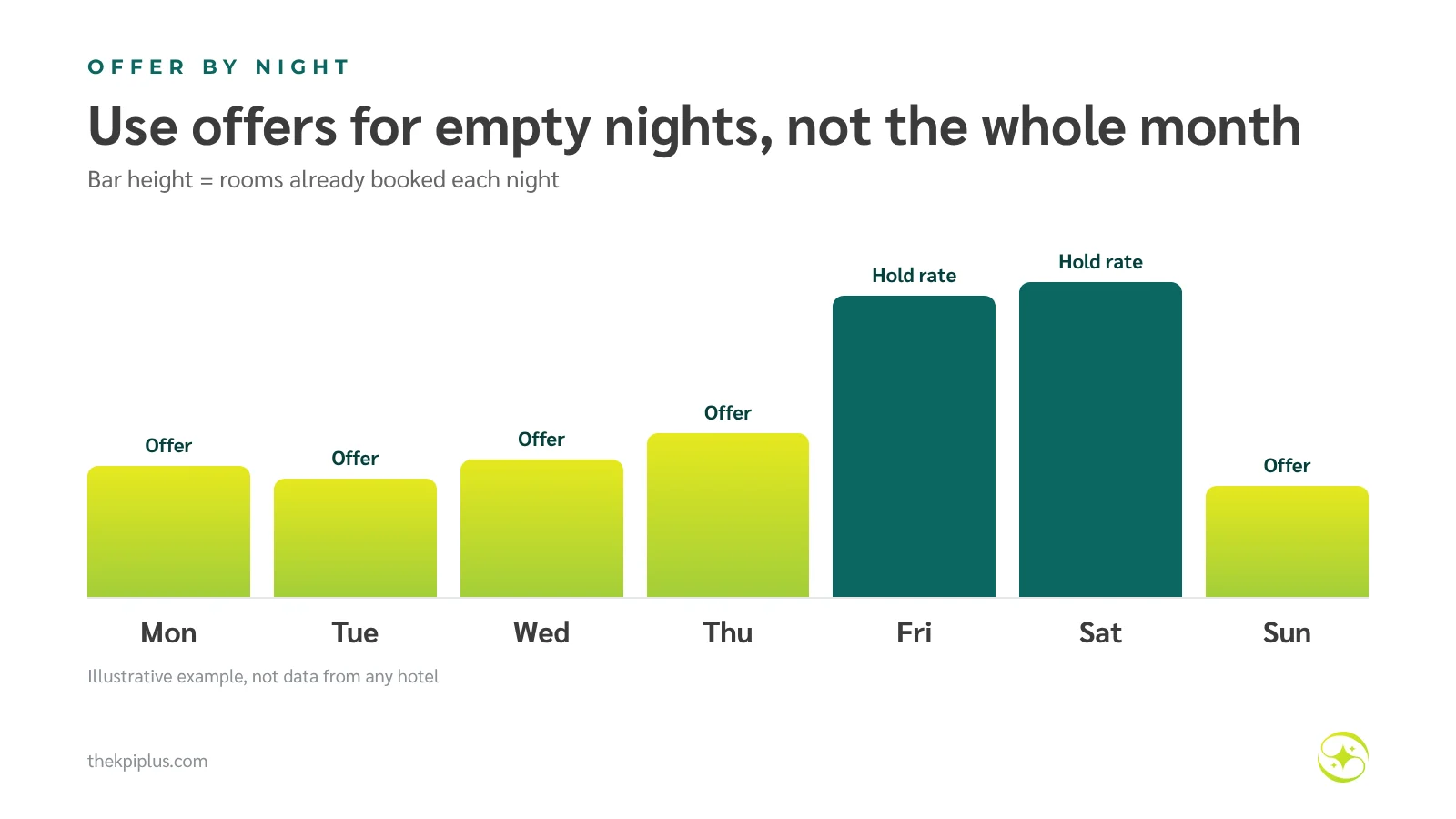
An offer doesn't have to be a discount — late check-out, breakfast or a service guests value can work, as long as you've costed it and the team can deliver it. State the dates, eligible rooms and how to book clearly. If you sell long-stay packages, review the terms against the shorter visa-free stays that now apply to many guests.
Measure: extra room nights sold, average daily rate (ADR), and revenue after discounts, commission and the cost of the perk.
4. Use your small team's advantage to shape the guest experience
Small properties usually know their guests and neighbourhood more closely. Use that where it genuinely helps: pre-arrival directions, nearby food suggestions, rooms prepared to requests made in advance — without promising more than the team can deliver.
Start with recurring questions and problems. If guests often can't find the entrance, fix the confirmation message. If Wi-Fi is unreliable, fix it before calling yourself "great for remote work". A good experience starts with basics done consistently.
Do this: pick the three most common problems or questions and fix both the pre-arrival information and the service step behind them.
5. Reply on time — without promising 24/7
Guests ready to book ask about availability, price, check-in time and transport — in Thailand often through LINE and OTA chat. With a small team, name your main channel and realistic reply hours, prepare answers to common questions, and decide who owns messages at each time of day.
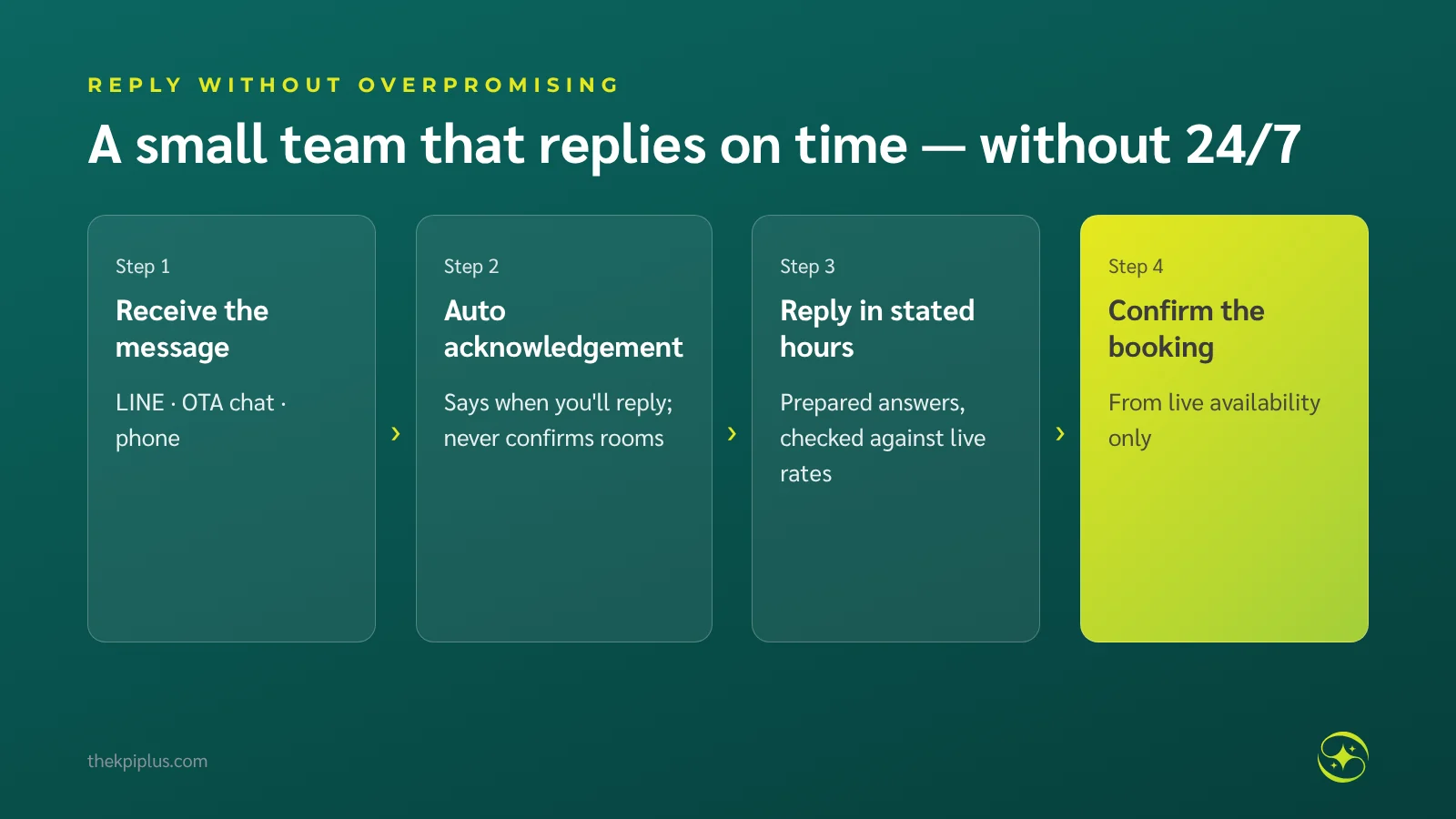
An automatic reply can tell guests their message arrived and when you'll answer. Drafting tools can save typing, but anything about price, availability or terms must come from current data and be checked before sending. Never let an automatic reply confirm more rooms than you have.
Do this: send test questions through the channels guests use, inside and outside office hours, and check reply time, clarity and hand-over to the right person.
6. Make checking availability, rates and bookings a daily routine
A room night can't be stored and sold later; once the night passes, an empty room earns nothing. Check new bookings, rooms left to sell and rates for upcoming dates regularly — especially around local events and source-market holidays when demand moves fast.
If you sell on several channels, watch for mismatched availability and terms to avoid overbooking and confusion. A PMS or channel manager can take over repetitive work, but choose one that fits your room count, booking volume, existing systems and team — not something more complex than you need.
Numbers to watch: rooms available and sold each night · average daily rate · new bookings · bookings by channel. Once you have enough data, add RevPAR and cost per channel — the RevPAR calculator (in Thai) makes this quick.
7. Use reviews and repeat stays to improve the business
Guests read previous guests' experiences before booking, and search tools use reviews to decide who a property suits. Cleanliness, room readiness, problem-solving and polite replies to reviews are all part of marketing. If several reviews mention the same problem, fix the service before spending on content or ads.
After the stay, invite guests to share feedback and tell them how to reach you if they'd like to return. Any later offers should go through the channel the guest chose, with their consent and in line with your privacy policy.
Do this: summarise review themes monthly, pick one issue the team can genuinely fix, and track whether comments on it change.
A small hotel marketing starter plan for a 20-room hotel
Imagine a 20-room hotel where Saturdays sell well, Sunday to Thursday nights stay partly empty, and staff have limited time for chat. A four-week start could look like this:
| Week | What to do |
|---|---|
| Week 1 | Split bookings by night and channel; check photos, rates and policies on every listing |
| Week 2 | Prepare answers on availability and transport; complete the website or main channel details |
| Week 3 | Test a weekday-night offer with a suitable guest group |
| Week 4 | Compare room nights sold, rates, channel costs and team time; decide what to continue |
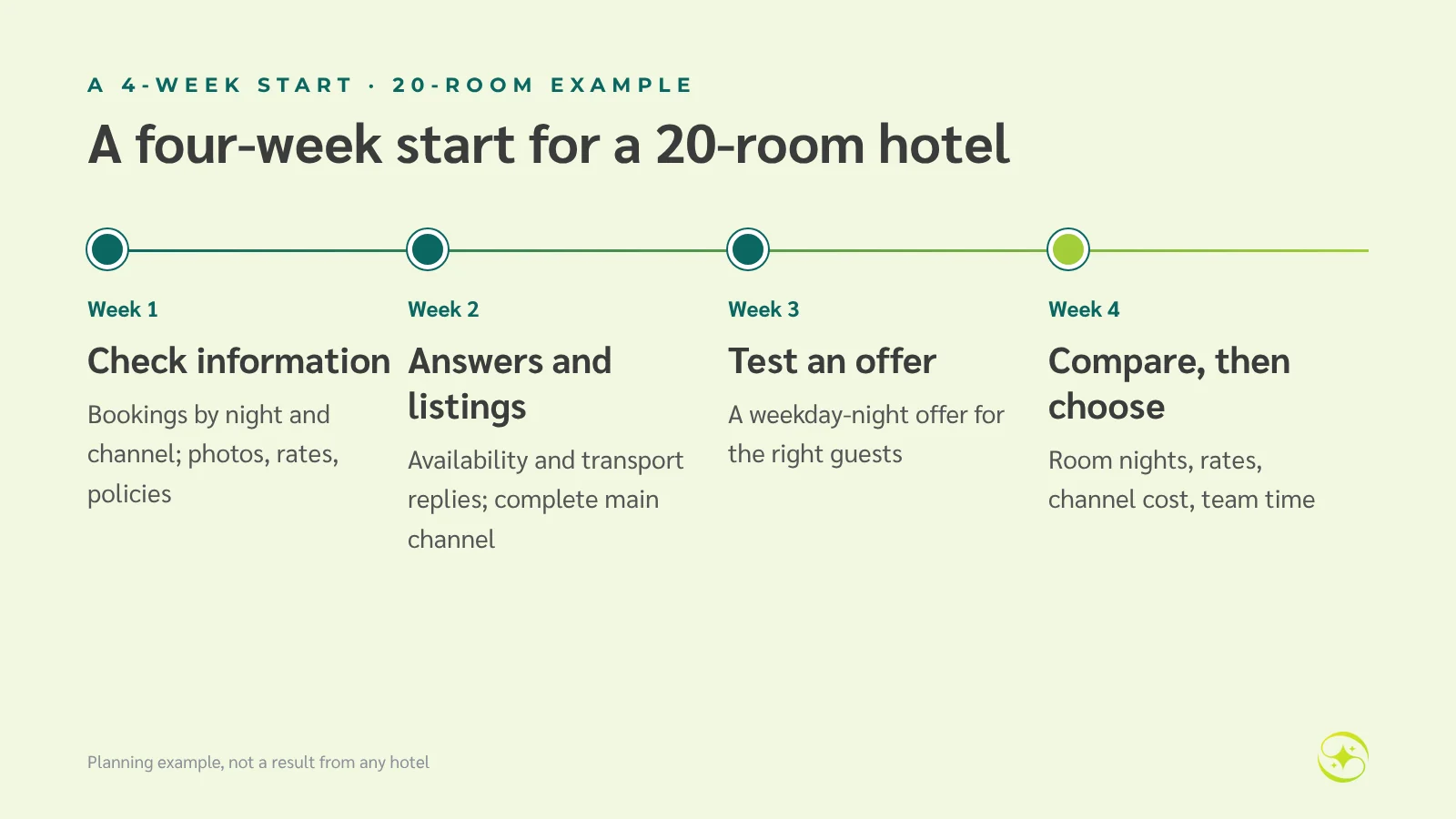
This is a planning example, not a result from any client, and not a numeric target for every area. The weeks before the year-end high season are a good time to run the first round.
Frequently asked questions
Does a small hotel need to be on every OTA?
No. Choose the channels that bring guests who suit your property and that your team can keep accurate — rates, availability and messages. If you open several channels at once, you need a way to keep information consistent so you don't risk overbooking.
We can't answer chats overnight. Will we lose bookings?
You may lose some, but promising round-the-clock replies you can't deliver causes problems too. Make room details, rates and terms complete on your listings, state clear reply hours, and use an automatic acknowledgement that never confirms availability by mistake.
Should a small hotel start with marketing or with systems?
Look at the real bottleneck first. If guests can't find you or your listings are incomplete, fix visibility and information. If bookings come in but rates and availability are often wrong, sort out your process or systems before promoting more.
Google now lets people book hotels through AI. Will small hotels lose out?
As of late 2026, booking in Google's AI Mode is live only in the United States and started with large chains and OTAs. Small hotels in Thailand aren't directly affected yet, but should prepare by keeping information complete and consistent across website, Google Business Profile and OTAs, and by looking after reviews.
Summary
Small hotel marketing pays off when you choose the right guests, make booking easy, price and open rooms correctly, and deliver service your team can sustain. In late 2026, with international demand flat, the best return for a small hotel usually isn't a bigger budget or a new channel — it's not leaving sellable nights empty and not underpricing the nights that sell.
For help with pricing, channels and day-to-day operations, see independent hotel management or our hotel revenue management overview. To review which channels your rooms sell through and whether your rates fit each night, request a Hotel Performance Audit with The KPI Plus.
Related reading: Hotel Organizational Structure and Hotel Rate Parity.