OTA / Direct Booking
Hotel Rate Parity: What It Means and How to Control Prices Across Channels (2026 Update)
Hotel rate parity explained: wide vs narrow parity, Europe's ban, why rates leak, how to check OTA, website and Google prices, and direct-booking perks.
In this article
What changed: Europe dropped parity clauses, but pricing pressure remains
Parity rules in Europe have shifted since 2024. On 19 September 2024, the EU's top court said Booking.com's restrictions on hotels offering lower rates on their own websites or rival sites were unnecessary and could reduce competition, Reuters reported. From 14 November 2024, Booking.com has had to comply with the Digital Markets Act (DMA), which bans both wide and narrow parity clauses.
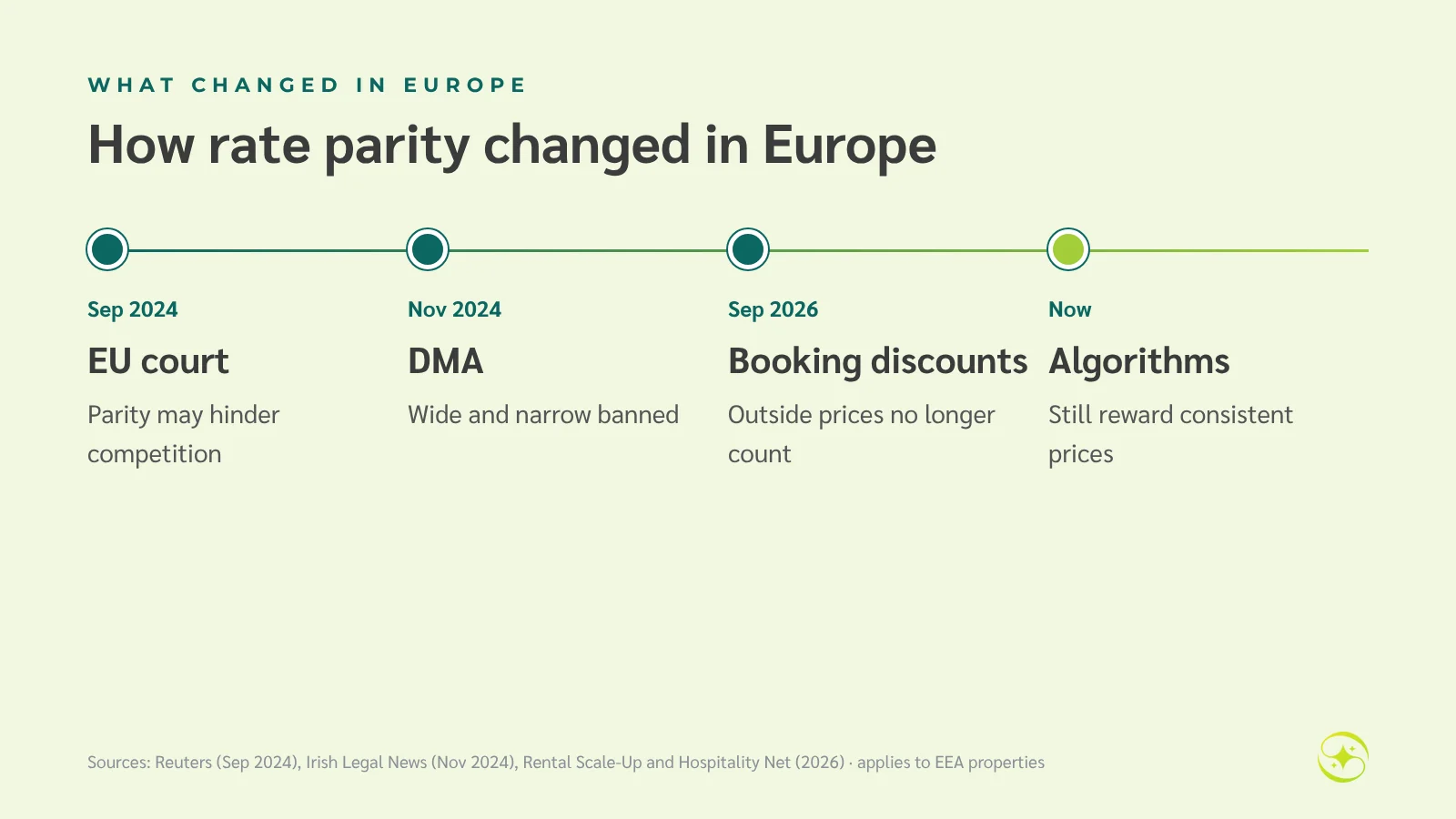
Rental Scale-Up reported a further change in September 2026: Booking.com stopped using prices on other channels to decide whether EEA properties qualify for discounts it sponsors. Yet a Hospitality Net analysis this year argues that even without contract clauses, OTA ranking algorithms still reward properties whose prices are consistent.
What this means for hotels: these changes apply only to properties in Europe. Hotels in Thailand need to read their own OTA contracts — and whatever the contract says, consistent pricing still matters for OTA ranking, guest trust and how Google shows your rates.
What is hotel rate parity, and how is it different from a parity clause?
Rate parity is a pricing approach; a parity clause is a contract term some OTAs have used to enforce it. There are two main types.
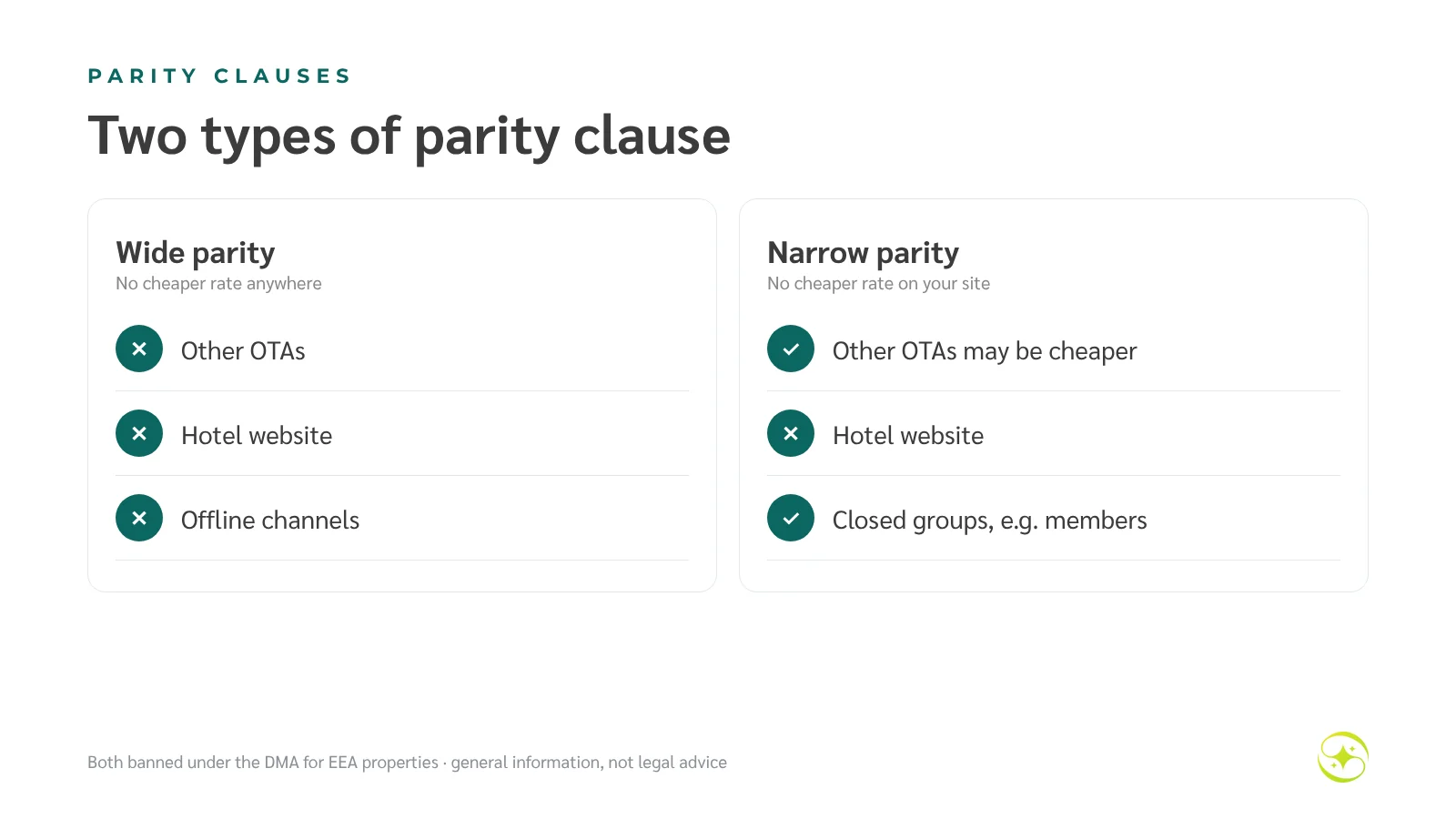
| Type | Meaning | Status in Europe |
|---|---|---|
| Wide parity | No cheaper rate on any channel, including other OTAs and your website | Banned under the DMA |
| Narrow parity | No cheaper rate on your own website | Banned under the DMA |
Watch out: this article is general information, not legal advice. Contract terms vary by OTA and country — check your latest contracts before changing your pricing policy.
Why do room rates differ between channels?
Most leaks aren't caused by the hotel setting the wrong rate, but by channels it doesn't directly control. Knowing the cause tells you where to fix it.
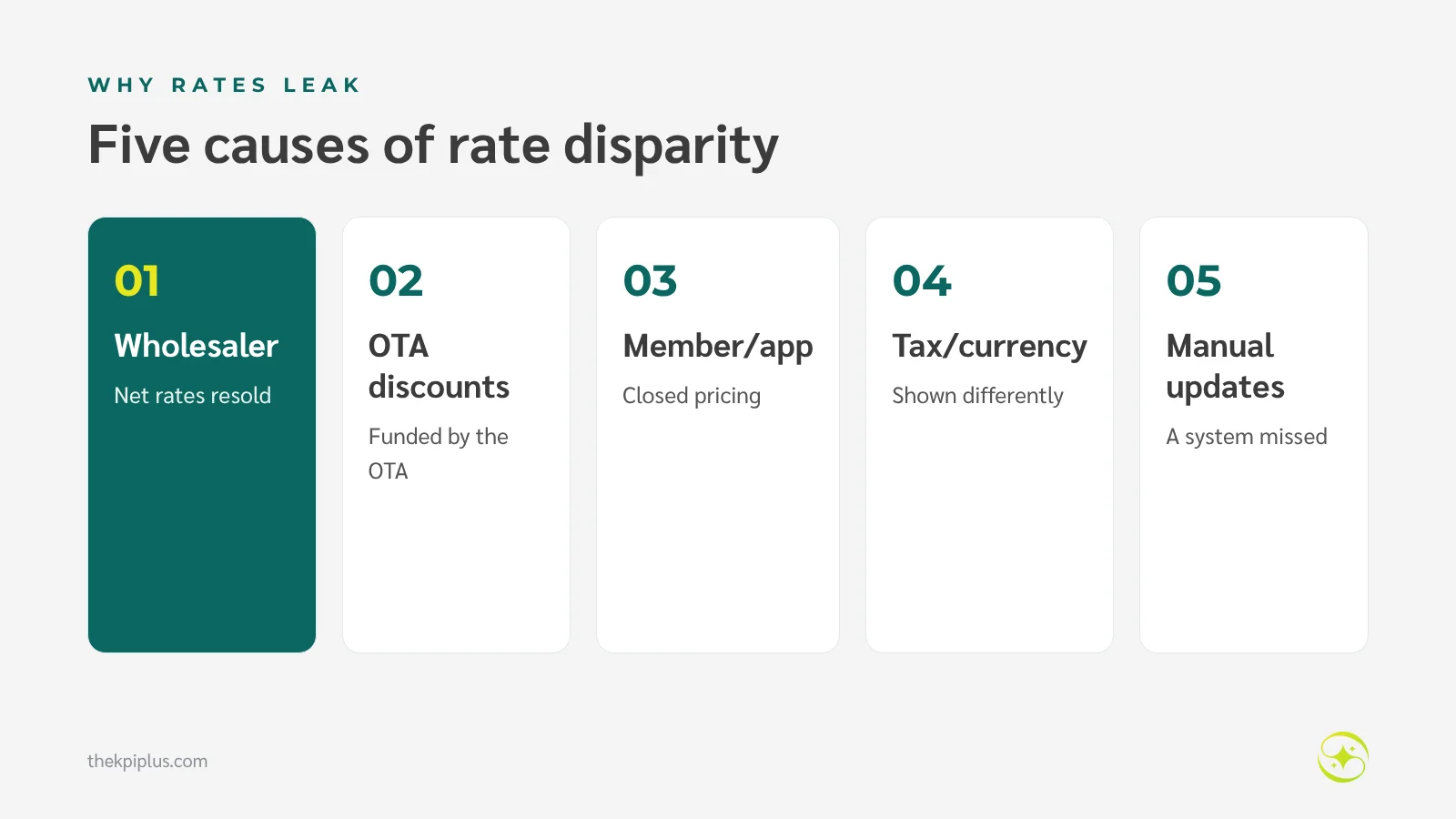
1. Wholesale or bedbank leakage: net rates given to tour operators get resold on public websites
2. OTA-funded discounts: the OTA cuts the price from its own commission, so guests see a lower rate even though you receive the same
3. Member or app pricing: discounts only for logged-in users or app bookings
4. Tax and currency display: one channel shows tax and service included, another shows pre-tax
5. Manual updates: a rate changed in one system but not another, when there's no channel manager
1. Check rates systematically
Effective checks compare the same room, dates, guest count and conditions — breakfast, cancellation policy. Otherwise you compare the wrong things and fix the wrong things.
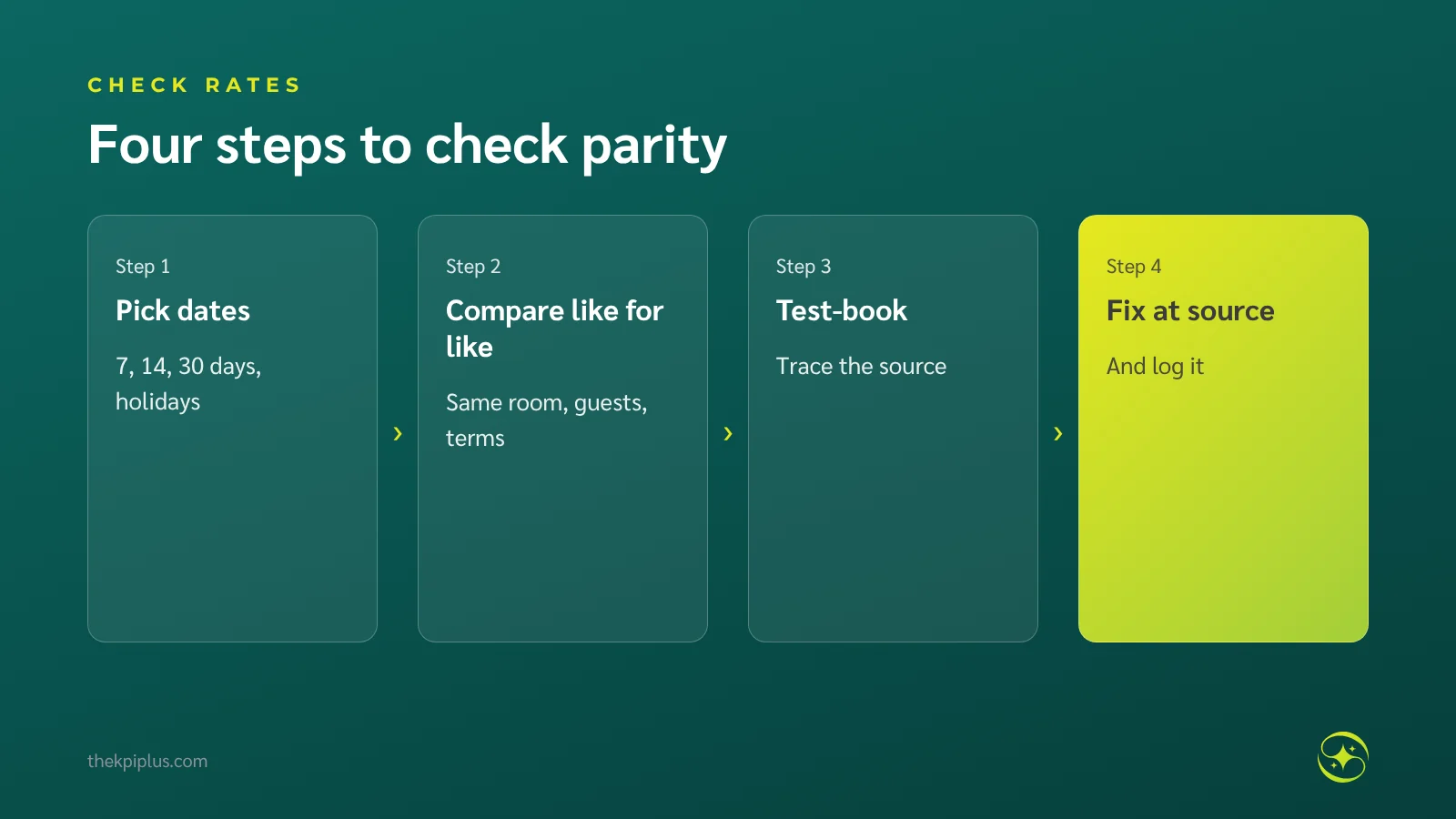
| Check | Example |
|---|---|
| Dates | 7, 14 and 30 days ahead, long weekends, high season |
| Channels | Website, 2–3 main OTAs, Google and metasearch |
| Conditions | Room type, guests, breakfast, cancellation policy |
| Display | Tax and service included? Which currency? |
Do this: run a rate check every week, and log every case where prices differ by more than 3%, with the channel and date.
2. Close wholesale leaks
If you find a lower rate on a site you don't contract with directly, it usually comes from a wholesaler's net rate being resold. Make one real test booking and check which partner delivers it into your system — that tells you the source.
- State in contracts that net rates may not be sold room-only on public channels
- Separate package rates from room-only rates clearly
- Suspend allocation to partners who breach repeatedly
3. Talk to the OTA when its discounts undercut your website
When an OTA funds a discount from its commission, your revenue stays the same but guests see your website as more expensive. Check which discount programmes you've opted into, and ask your OTA account manager to explain where the lower price comes from.
Numbers to watch: % of dates where your website is more expensive than an OTA · leaks found per month · direct booking share
4. Win direct bookings with perks, not price cuts
The safest approach is to keep room rates equal and give guests another reason to book direct. This usually doesn't conflict with contracts and doesn't lower revenue per room.
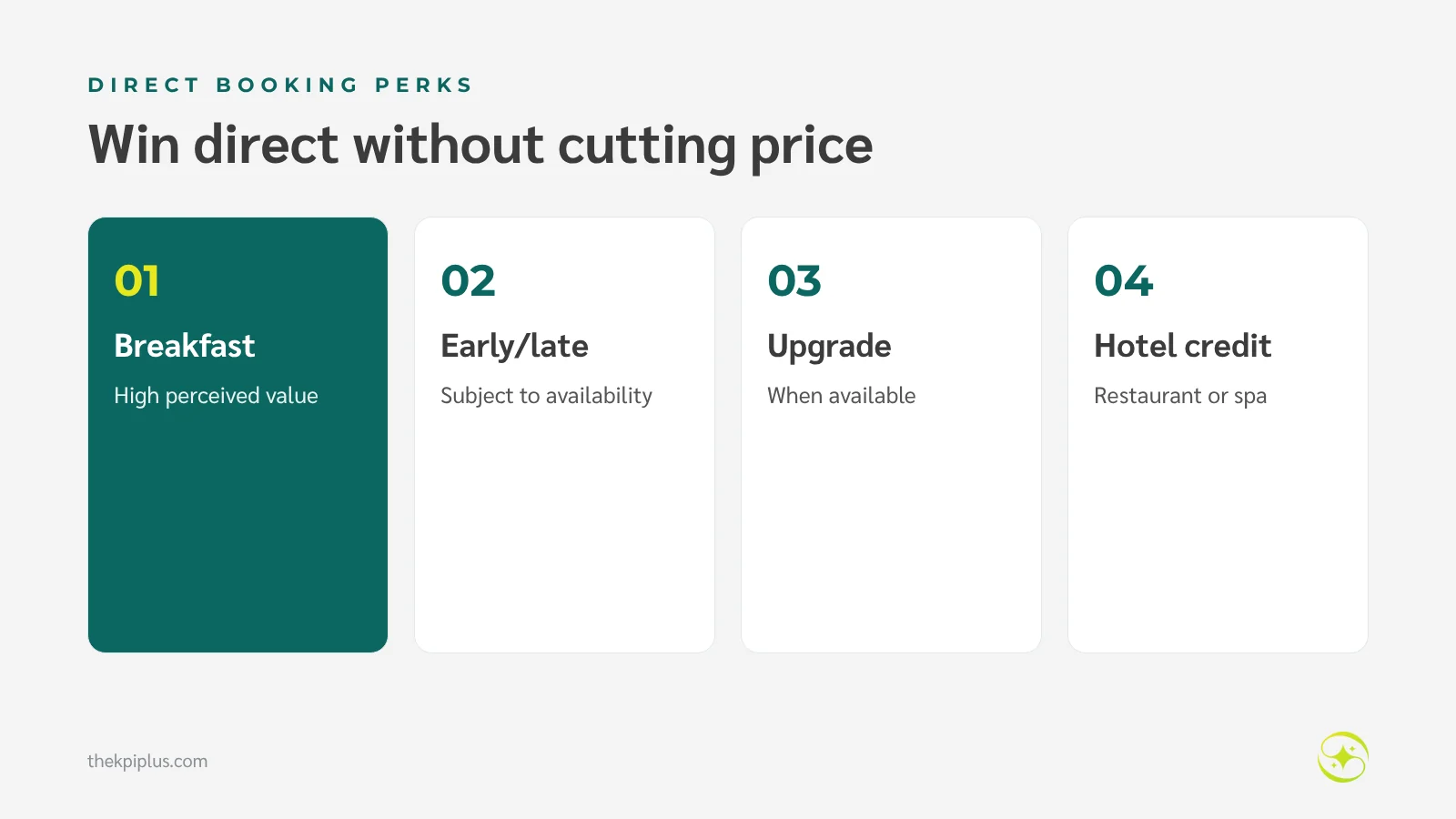
| Perk | Cost to hotel | Value to guest |
|---|---|---|
| Breakfast | Low to medium | High |
| Early check-in / late check-out (subject to availability) | Low | High |
| Upgrade when available | Low | High |
| Restaurant or spa credit | Medium (partly returns as revenue) | Medium |
Use the OTA commission calculator (in Thai) to see how much you save per direct booking, and size your perks accordingly.
5. Keep the price you send Google matching your booking page
If you use free booking links or Google hotel ads, the price you send to Google Hotel Center must match what guests see when they click into your booking engine. Google checks price accuracy continuously; if prices often don't match, it may show your price less or stop showing it.
Do this: check that the price shown on Google includes tax and service the same way your booking engine does, and recheck after every major rate change.
A weekly hotel rate parity routine
Rate checks aren't a one-off task. Set a rhythm your team can keep and a clear owner.
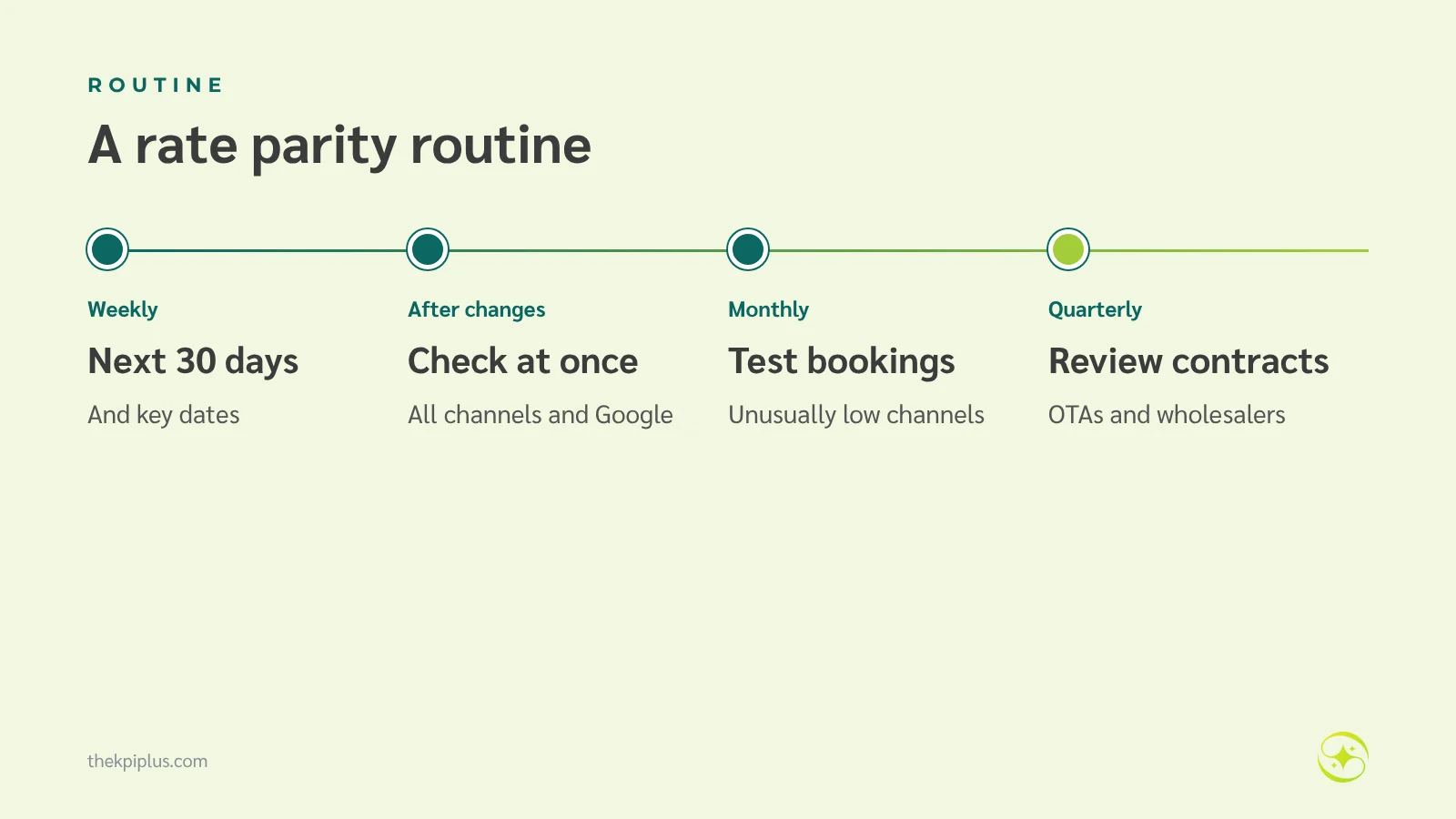
| When | Task | Owner |
|---|---|---|
| Weekly | Check the next 30 days and key dates | Revenue or reservations |
| After rate changes | Check all channels and Google | Whoever changed the rate |
| Monthly | Test-book on channels with unusually low rates | Revenue |
| Quarterly | Review OTA and wholesaler contracts | GM |
Planning example: a 45-room hotel losing direct bookings
Imagine a 45-room hotel whose direct share falls from 22% to 15% over three months. A rate check finds that on 12 of the next 30 days, one OTA is 8–12% cheaper than the website — caused by a wholesaler's resold rate and an app-only OTA discount.
The team notifies partners and suspends allocation to the one in breach, matches the direct rate, adds free breakfast for direct bookings, and aims to bring the direct share back to 20% within two months. This is a planning example, not a result from any client.
Frequently asked questions
Can a hotel in Thailand sell cheaper on its own website than on OTAs?
It depends on each OTA contract you have signed. The EU rules banning parity clauses apply to properties in the European Economic Area, so hotels in Thailand should read their own contracts. Many choose equal rates plus direct-booking perks — breakfast or late check-out — which usually doesn't conflict with contracts.
What's the difference between rate parity and rate integrity?
Rate parity means the same room on the same terms has the same price on every channel. Rate integrity is broader: your whole rate structure makes sense — non-refundable below flexible, member rates with clear conditions, and no leaked rates from unauthorised channels. Hotels should manage both.
Why are some OTAs showing our hotel cheaper than the rate we set?
Common causes are OTA-funded discounts, wholesale or bedbank rates resold without permission, app-only or member pricing, differences in how tax and currency are displayed, and manual update errors. Make a real test booking to see where the rate comes from.
How does rate disparity affect Google?
Google Hotel Center checks the accuracy of the prices you send against the price on your booking page. If they often don't match, Google may show your price less or stop showing it in free booking links and hotel ads. Your booking-engine price must always match what you send to Google.
How often should we check rate parity?
Check key dates at least weekly — the next 30 days, long weekends and high season — and immediately after changing rates or launching a promotion. Hotels with many channels can use an automated rate-shopping tool, but should still make a real test booking once a month to confirm.
Summary
Hotel rate parity means the same room on the same terms has the same price everywhere. Europe has removed parity clauses from contracts, but hotels in Thailand must check their own, and consistent pricing still matters for OTA ranking, guest trust and Google. Check rates systematically, close leaks at the source, and win direct bookings with perks rather than price cuts.
To manage rates and channels as one system, see revenue and commercial management; to find where guests drop out before booking direct, see hotel direct bookings. To start from your own data, request a Hotel Performance Audit.
Related reading: What Is an OTA? and Increase Hotel Bookings from Google.