Hospitality Technology
How technology and AI can actually help a hotel team work better
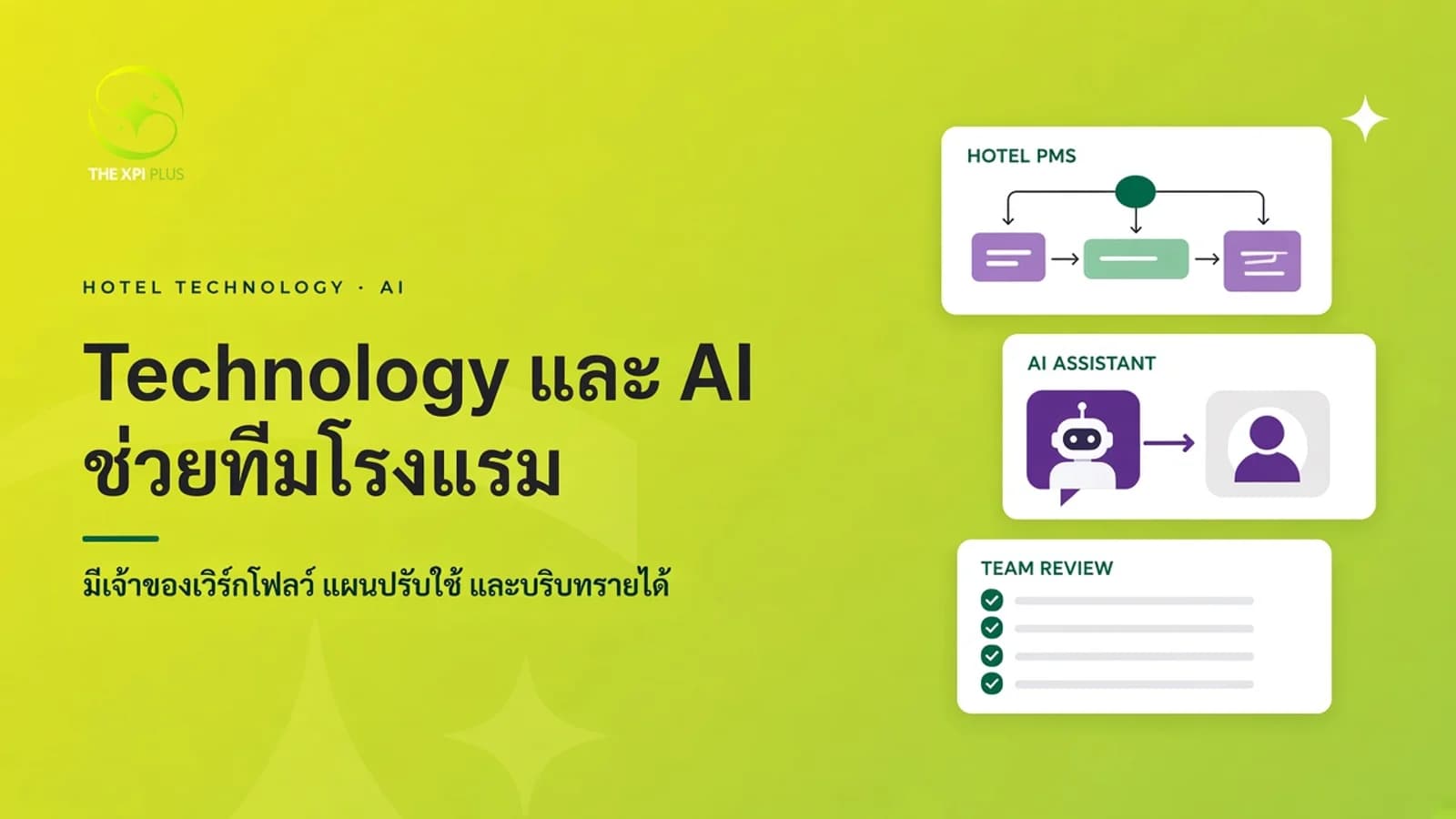
Hotel systems, automation, and AI need a workflow owner, an adoption plan, and a revenue context — not only a technical switch-on.
In this article
Technology should make hotel work more clearly owned
Technology adoption is therefore a commercial project as well as a technical one. Start from the work the hotel wants to do better, not from a feature list alone.
Map the workflow before choosing a tool
Before bringing a new system in, record the current path of information and action: how an enquiry becomes a reservations reply, how a rate change moves from a decision into distribution, or how a campaign connects to the website, booking system and revenue review.
That map often reveals the real friction. Sometimes the gap is missing tooling. Sometimes it is unclear handoffs, repeated manual steps, incomplete context or shared ownership that never quite lands. Systems help, but they should be chosen to improve a workflow you can already see.
Define revenue, sales and marketing use cases
A useful rollout should be explainable in a concrete sentence, such as “this tool will help reservations reply with better availability context” or “this workflow will help the team track campaign lead sources and review them more easily.” The clearer the sentence, the easier it is to judge whether the system is being used well.
This reduces feature-driven adoption. A long capability list does not create value by itself. Prioritise the capabilities that make a recurring decision or handoff more useful.
Design adoption, not only access
Giving the team accounts is not the same as adoption. People need to know when to use the system, what good use looks like, who can answer questions, and what to do when the workflow changes. Training works better with real hotel scenarios than generic examples.
A practical adoption plan can include a short trial, a named owner, a compact reference guide, a review rhythm and room to raise exceptions. That gives the team space to learn while keeping the rollout tied to work that matters.
Use AI with a clear role
AI can help with structured drafting, summarising internal information, preparing a first reply or organising recurring questions. It still needs a role, a review step and clear data boundaries.
The goal is not to add AI because it is available. It is to reduce manual work that does not create value, or to clarify a recurring workflow, while keeping human review where it is needed.
Next step
Choose one revenue or growth workflow that is slow, unclear or heavily manual today. Map the steps, owners, data and desired outcome before considering new technology. That exercise makes the right adoption questions easier to see.
Example: Before launching a new system, the team names the repeated work to reduce, the data that must connect, and the owner who will review results together.
Related reading: Hotel Revenue Meetings · Hotel Organizational Structure · Small Hotel Marketing