Hotel Marketing
Hotel Review Management: How to Ask, Reply and Turn Reviews into Bookings (2026 Update)
Hotel review management for owners and GMs: how to ask for reviews within Google's rules, reply to good and negative reviews, and track the numbers that matter.
In this article
What changed in 2026: fresh reviews and owner replies matter more
Almost everyone still reads reviews, but they now weight recent reviews and owner replies more heavily. BrightLocal's Local Consumer Review Survey 2026 (published 11 February 2026, 1,002 US adults) found that 97% read reviews before choosing a local business, 74% only care about reviews from the last three months, and 89% expect owners to respond.
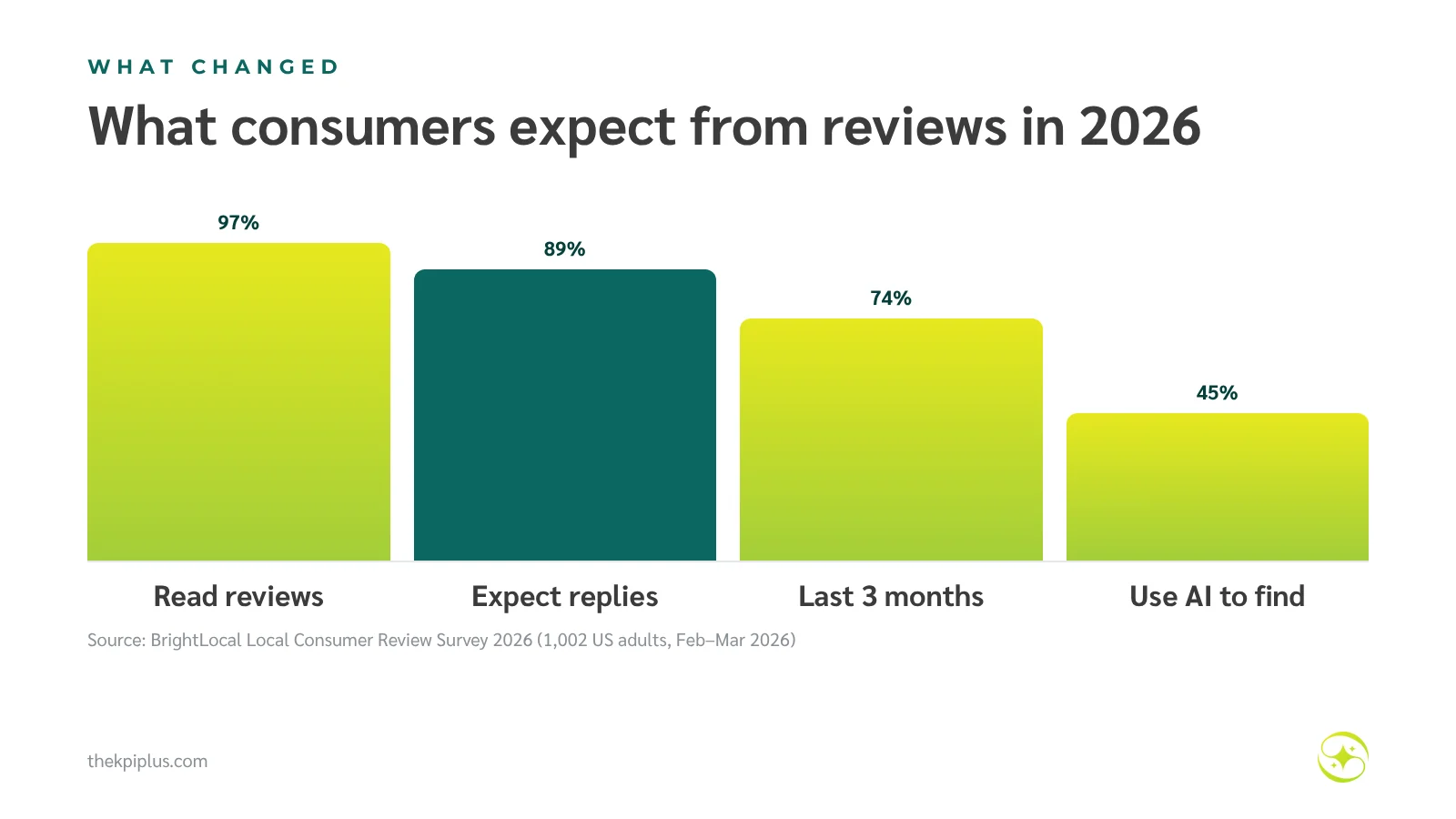
In a March 2026 follow-up, BrightLocal reported that the share of people using AI tools such as ChatGPT or Google's AI Mode to find local businesses rose from 6% to 45% in a year. Google's own 2026 Business Profile playbook for hotels lists review management as one of the core tasks for every property.
What this means for hotels: the data is from US consumers, but it matches how international travellers research Thai hotels. A good score built years ago is not enough. You need a steady flow of new reviews and visible replies that show someone is looking after guests.
How is hotel review management different from social media?
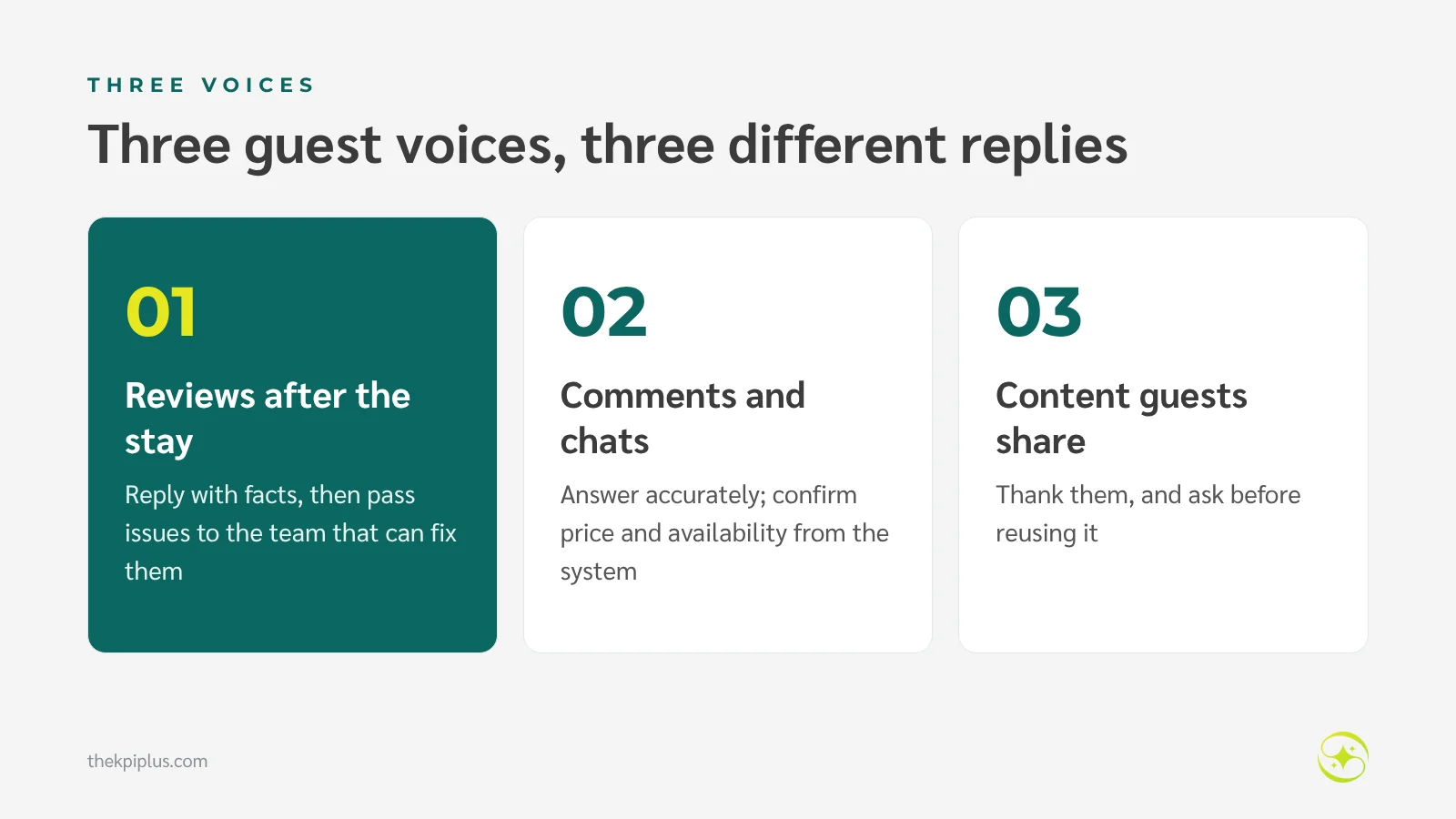
Reviews come from people who have already stayed; comments and messages on social media mostly come from people who haven't booked yet. They need different replies and different measures, even if the same person handles both.
| What people see | What it tells you | What the hotel should do |
|---|---|---|
| Reviews on Google and OTAs | The real experience after a stay | Read, reply, and pass issues to the team that can fix them |
| Comments under posts | Interest or questions about content | Answer accurately, then move to booking when dates are mentioned |
| Private messages (Messenger, LINE, WhatsApp) | Pre-booking questions or special requests | Reply within your stated time; confirm price and availability from the system |
| Photos and videos guests tag | The view guests chose to share | Thank them, and ask permission before reusing anything |
Likes and comments show interest in your content. They don't tell you whether guests were happy with their stay — reviews do.
1. Ask every guest for a review, politely and within the rules
The most effective and safest approach is to send the same invitation to every guest after check-out, with a direct link or QR code to your review page. No incentives, and no filtering for guests who seemed happy.
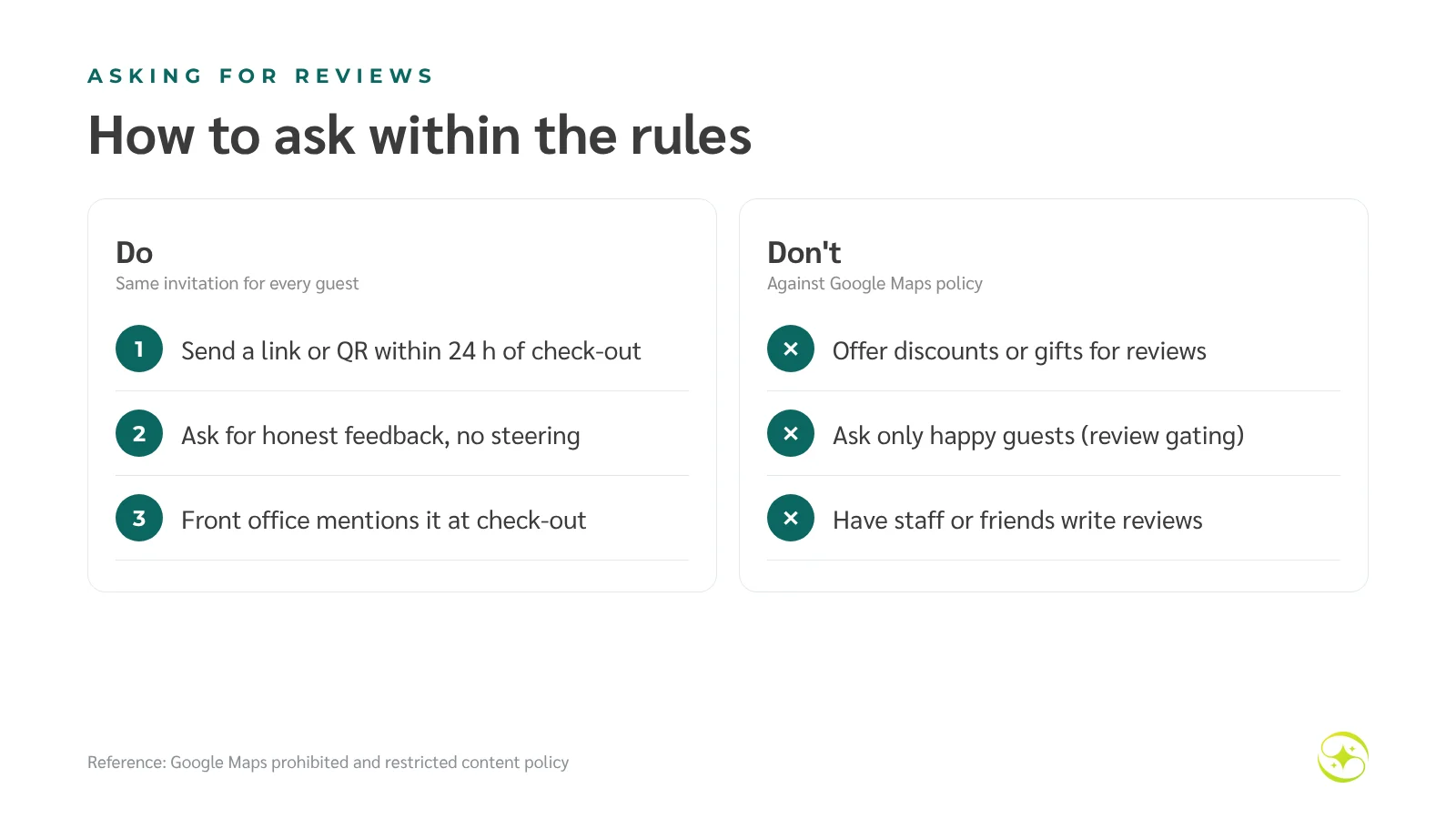
Send it within 24 hours of check-out, while the stay is fresh. Keep it short and neutral:
Example: "Thank you for staying with us. If you have a moment, we'd love you to share your honest experience through this link. It helps our team improve, and helps the next traveller decide."
The KPI Plus offers a free Google review link generator for hotels (in Thai) that creates a link and QR code for your post-stay email, LINE message or in-room card.
Watch out: Google Maps policy prohibits offering discounts, gifts or other incentives for reviews, and prohibits selectively asking happy guests (review gating). Reviews collected this way can be removed and damage trust in your profile.
Do this: add the review link to the post-stay message every guest receives, and have front office mention it at check-out.
Measure: new reviews per month against room nights sold in the same month.
2. Reply to good reviews specifically, not with a template
Replies to good reviews are written for future guests as much as for the reviewer. Thank the guest and mention one thing they actually wrote about — without revealing details of their stay.
Example: "Thank you for sharing. We're glad the walking route to the local restaurants made your trip easier — we'll pass your kind words on to the front desk team."
Avoid pasting the same reply under every review; readers notice. If you use AI to draft replies, have someone check and personalise each one.
3. Reply to negative reviews with the same four steps
A negative review rarely damages a hotel on its own — the reply decides how readers judge you. Check the facts internally first, then reply in four steps: thank the guest, acknowledge what really happened, explain what you are fixing, and invite them to continue privately.
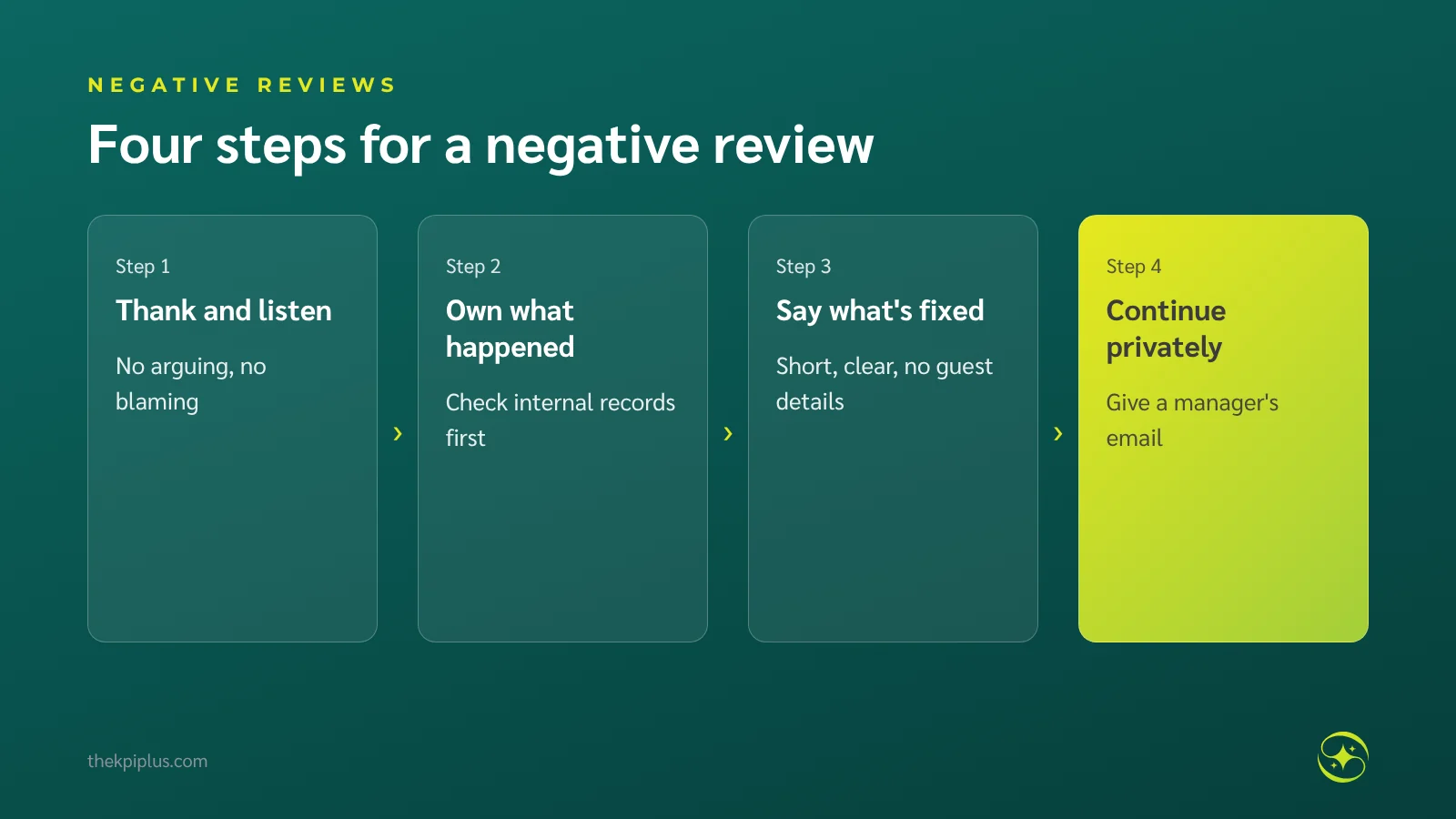
Example: "Thank you for telling us about the wait at check-in. We're sorry your arrival wasn't smooth. We have changed how housekeeping and front office hand over room status. If you're willing, please contact our manager by email so we can follow up with you directly."
Never argue, accuse the guest, or mention names, dates, room numbers or prices in a public reply. If a review contains something untrue, state the facts briefly and politely, and report it through the platform if it breaks policy.
Measure: share of negative reviews answered within 48 hours.
4. Turn reviews into operational fixes
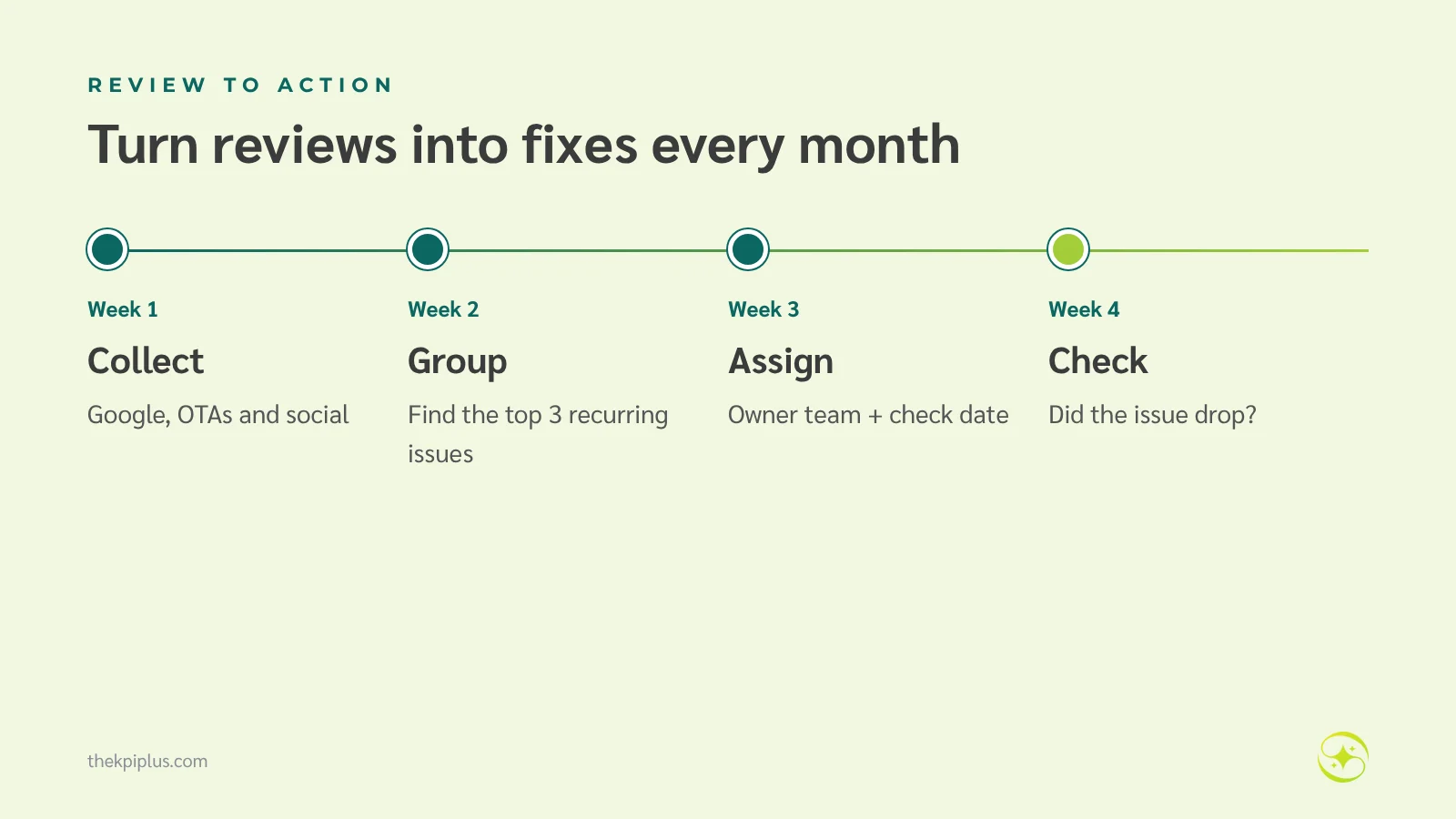
Replying without fixing the cause means the same complaint returns next month. Once a month, collect reviews from every channel, group them by topic, and assign recurring issues to the team that can fix them — with a date to check the result.
| Recurring issue | Team that owns it | Example fix |
|---|---|---|
| Guests can't find the entrance | Front office and website | Update the map, entrance photo and pre-arrival message |
| Room photos don't match expectations | Sales and content | Reshoot photos for each room type |
| Room not ready at check-in time | Housekeeping and front office | Change cleaning order and status updates |
| Slow replies to pre-booking chat | Reservations | Set chat checking times and evening cover |
Answers to common questions should also go onto your website and OTA listings. If guests often ask about parking, add the answer to the page so future guests don't have to ask.
5. Use guest content on social media the right way
Guest photos, videos and quotes show prospects the real stay better than advertising does. Before reposting anything on the hotel's accounts, ask the owner for permission and keep a record of it.
- Ask by reply, and say where and for how long you'll use it
- Credit the guest as they prefer, and never cut a quote so its meaning changes
- Avoid images showing children's faces, licence plates or other guests' personal details
- Ask again separately before using it in paid advertising
Watch out: a guest's photo belongs to the guest and may contain personal data covered by Thailand's Personal Data Protection Act (PDPA). Reposting without permission creates legal risk and harms the relationship.
6. Measure hotel review management with one set of numbers
The useful numbers reflect recent work, not your all-time average. Use the same set every month and read them next to bookings from channels you can track.
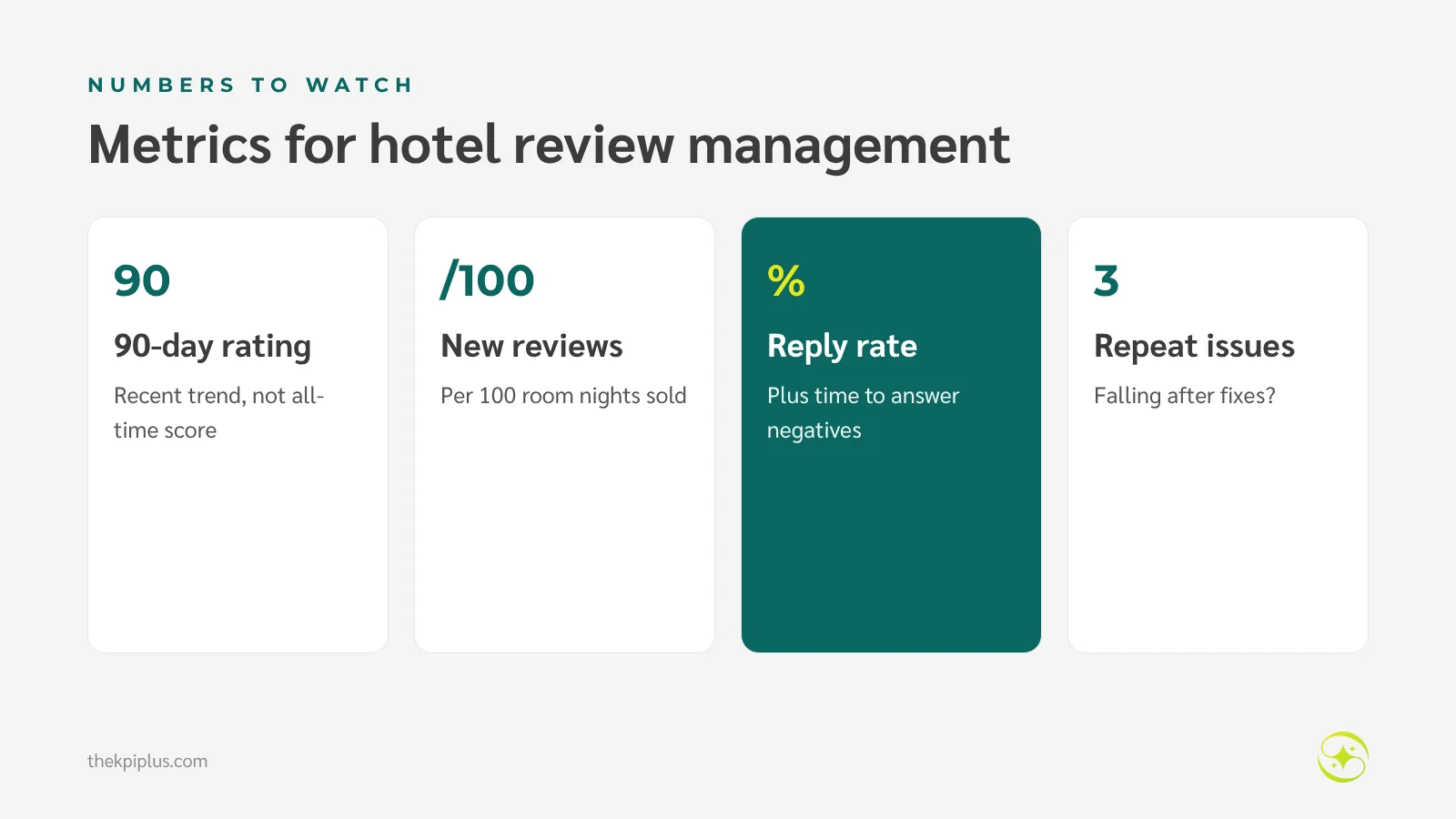
Numbers to watch: average rating, last 90 days · new reviews per 100 room nights sold · % of reviews answered · average time to answer negative reviews · how often the same issue is mentioned again
If your rating and bookings rise together, don't assume reviews caused all of it — price, season and advertising matter too. Treat reviews as a quality signal and read them alongside Google Business Profile and website booking data.
Planning example: a 40-room boutique hotel in Phuket
Imagine a 40-room hotel selling about 900 room nights a month, receiving four or five new Google reviews monthly and replying to none. A four-week plan could look like this:
| Week | Action | Owner |
|---|---|---|
| 1 | Create a review link and QR code; add them to the post-stay message | Sales |
| 2 | Reply to the last 90 days of reviews, negative ones first | GM |
| 3 | Summarise the top three recurring issues and assign them | GM and department heads |
| 4 | Check reviews twice a week; start a monthly metrics sheet | Sales |
If 3% of room nights sold turn into a review, the hotel would receive around 27 new reviews a month instead of four or five. This is a planning example, not a result from any client.
Frequently asked questions
Can a hotel offer a discount in exchange for a Google review?
No. Google Maps content policy prohibits offering discounts, free items or any incentive for reviews, whether or not you ask for a positive one. Incentivised reviews can be removed and put the profile at risk. The safe approach is to invite every guest to share an honest opinion and make it easy with a direct link or QR code.
Can we ask only happy guests to leave a review?
You shouldn't. Sending satisfied guests to public review sites while routing unhappy ones to a private form is called review gating, and Google does not allow it. Send the same invitation to every guest. If someone has a problem during the stay, fix it before check-out rather than deciding who receives the review link.
How quickly should a hotel respond to reviews?
Set a target your team can keep: for example, negative reviews within 24–48 hours and other reviews within three to five days. Consistency matters more than speed. BrightLocal's 2026 survey found 89% of consumers expect business owners to reply, so give one person clear ownership and a fixed checking routine.
What should we do about unfair or fake reviews?
Check your records first to see whether the stay happened. Reply publicly and politely without accusing anyone or sharing guest details. If the review breaks platform policy — not a real experience, abusive language, or posted by a competitor — report it through the platform's tools and keep your evidence. Never ask others to post reviews to bury it.
Should we manage reviews in-house or outsource it?
The hotel must always own fixing service problems, because an outside team cannot repair a room or a check-in process. Monitoring several review sites, monthly summaries and drafting replies can be outsourced, provided there is a clear approval step and replies are not copied from one template.
Summary
Effective hotel review management has three parts: invite every guest within the rules, answer every review with facts and a responsible tone, and send recurring issues back to operations. In 2026, with guests weighting recent reviews and using AI to search, a steady flow of fresh reviews is your proof that the hotel delivers what it says.
Reviews are one part of how your hotel appears across Google. To see how we set up profiles, reviews and website pages that lead to direct bookings, explore hotel SEO, Google Maps and AI Search and our hotel SEO and local search overview. If you'd like to know where to start, request a Hotel Performance Audit.
Related reading: Local SEO for Hotels and Hotel Social Media: Which Channels to Use.