Hotel Marketing
7 Hotel Marketing Ideas That Keep Working: A Practical Guide for Thai Hotels (2026 Update)
Seven hotel marketing ideas for late 2026: Google and AI search, ads, content, social, promotions, events and past guests, measured to net revenue.
In this article
What changed in late 2026 that hotels should know before planning
Before choosing any marketing idea, look at three developments from the past few months — each changes the questions you should be asking.
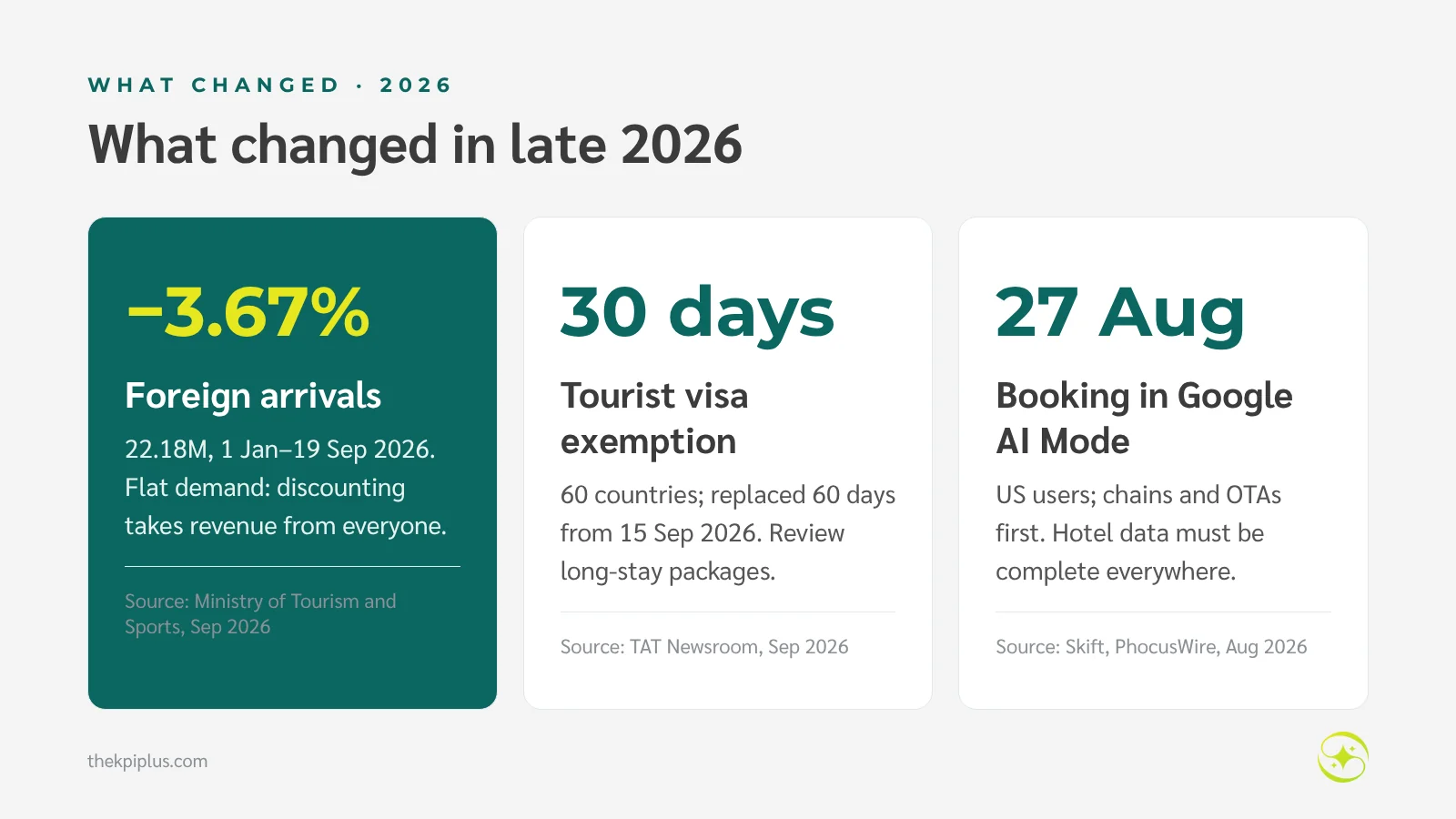
1. The international market isn't growing. From 1 January to 19 September 2026, Thailand received 22,183,678 foreign visitors, down 3.67% year on year, with China, Malaysia and India still the top three markets, according to Ministry of Tourism and Sports data reported by Nation Thailand. With demand flat, discounting to compete takes revenue from everyone.
2. The tourist visa exemption fell to 30 days. From 15 September 2026, passport holders from 60 countries and territories can stay visa-free for up to 30 days instead of 60, according to TAT. Hotels selling long-stay packages should review them before the season.
3. Hotel search is moving into AI conversations. On 27 August 2026, Google let US users search, compare and book hotels in AI Mode, starting with large chains and OTAs, according to Skift and PhocusWire. It hasn't been announced for Thailand, but it signals that complete, consistent hotel information everywhere matters more each year.
What this means for hotels: more activity isn't the answer. Choose fewer ideas, aim them at the dates you need, and measure what they actually earn.
Before you start: choose one clear marketing goal
Open your past bookings and ask: which dates do we need more bookings for, from which guests, and what rate or net revenue must we protect? A hotel trying to fill weekday nights has a different goal from one that's full every weekend but sells too cheaply.
Goals you can work with look like "grow direct bookings for Sunday–Thursday nights in November" or "build early bookings for next green season without discounting every room type". With a clear goal, choosing ideas is easy.
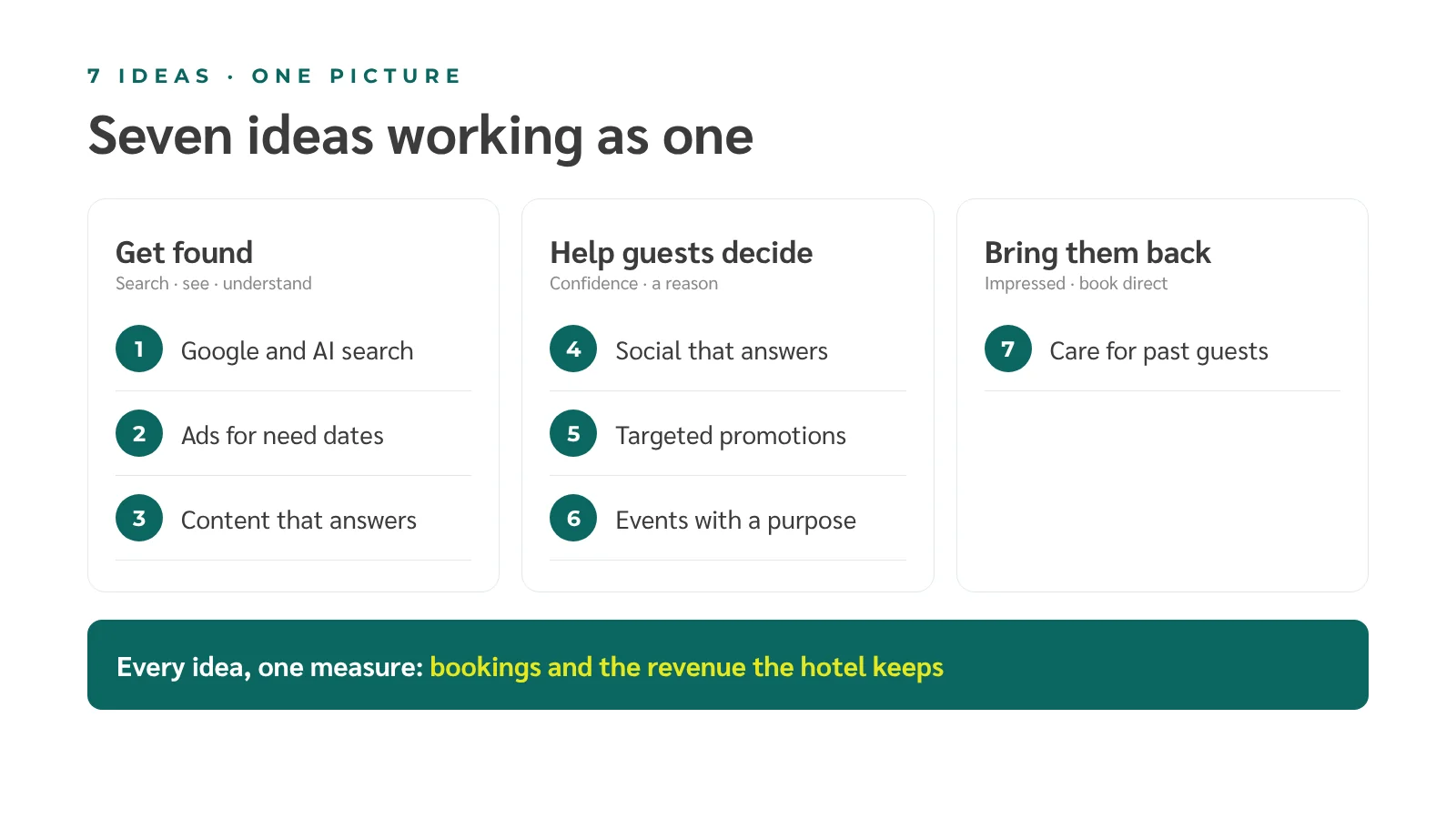
1. Make sure guests and search engines understand your hotel
Guests search by location, room type or specific needs, and in 2026 the first answer they see may be an AI summary from Google before they click any website. Your website, Google Business Profile and sales channels must give the same, complete information.
On your website, start with pages that answer pre-booking questions: where you are, who you suit, how to get there from the airport, and how room types differ. Room pages should be clear enough that both people and search engines understand them at a glance, with an easy route to booking.
Do this: align information across your website, Business Profile and main OTAs, refresh outdated photos and room details, and ask your booking-engine provider whether it's connected to Google Hotel Center.
Measure: search visitors, calls and direction clicks, and website bookings — separating brand searches from generic ones where possible.
2. Use online ads for the periods you actually need to sell
Google Ads and Facebook and Instagram ads reach certain guests faster. Most campaigns now use automation to choose audiences and bids, learning from the conversion data you send back — so if bookings aren't tracked correctly, the system optimises for the wrong thing.
Before running ads, check the landing page: do photos and details match the ad, are rates and terms clear, is mobile booking easy? Also make sure your cookie consent setup passes guests' choices correctly to your analytics and ad platforms.
Do this: pick one offer, one date range you need to sell and a test budget you can accept; confirm completed bookings are sent back as conversions with booking value.
Measure: bookings, booking revenue and ad cost per booking, compared with OTA cost for the same period.
3. Create content that answers pre-booking questions
Hotel content marketing doesn't need long articles about general attractions — AI answers those now. Valuable content is what only you can answer: which room suits a family with toddlers, whether there's parking, how far the beach really is.
Start with questions guests repeat in chat, LINE or by phone. Write clear answers on your website, then turn the same topics into posts or short videos. When content answers real questions, front office can reply faster by sending a link.
Do this: choose three frequent questions, write verifiable answers with real photos where they help, and link to the relevant room or booking page.
Measure: visits to those pages, clicks to room pages, fewer repeat questions and trackable bookings.
4. Use social media to build confidence and answer guests
Social media shows guests the real atmosphere and service before they decide. In Thailand, LINE Official Account is often where guests actually ask questions, while Facebook, Instagram and TikTok build visibility. You don't need every platform — choose those your guests use and your team can keep up with.
Posts that help sales show each room type, nearby recommendations and clear package details. Ask permission before sharing guests' photos or stories.
Do this: check profiles and booking links on every channel, assign who answers messages and an acceptable reply time, and plan post topics from guest questions.
Measure: chats that become real enquiries, reply time, booking-link clicks and bookings — not likes.
5. Run promotions for specific dates and guests
A good promotion has a business reason: filling weekdays, encouraging two-night stays, or selling a room type with high availability. Discounting every room every day may lift bookings but cut ADR and net revenue — and sometimes discounts guests who would have booked anyway.
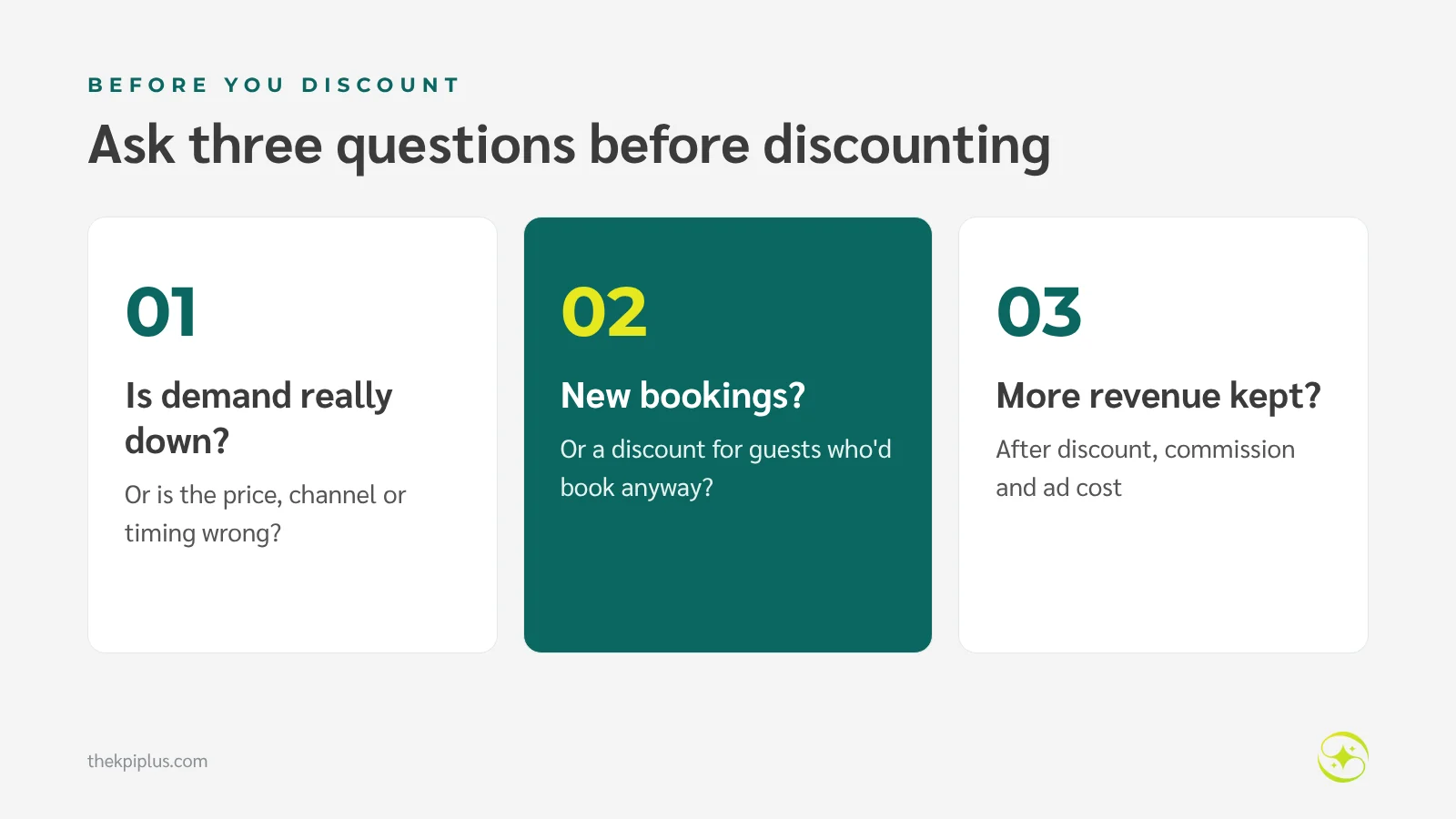
Instead of starting with a discount, ask what guests value — late check-out, breakfast, transfers or a local experience — and cost the benefit before offering it. This year, hotels selling long-stay packages should check terms against the shorter visa-free stay.
Do this: choose one date range to grow, define the offer and its cost, and compare it with normal sales over a similar period.
Measure: extra room nights, ADR, RevPAR, and revenue after promotion cost and commission.
6. Run events when they give guests a reason to stay
Events should fit your hotel's identity and guests' needs — a workshop with local makers, a special dinner, family activities. You don't need a big event for every festival. Another approach that works well is timing activities or offers around events already happening in your area.
Before starting, ask who this helps decide to book, which dates it fills, and what it costs in people, time, space and budget. An event many people attend but that has nothing to do with staying may not serve your goal.
Do this: test one small event during dates you need to sell, and record where bookers heard about it.
Measure: rooms and revenue linked to the event, total cost, guest satisfaction and whether it's worth repeating.
7. Give past guests a reason to come back
The stay itself shapes reviews, word of mouth and return direct bookings — and reviews are data AI uses to summarise who your hotel suits. Start with the basics: clear pre-arrival information, timely replies, cleanliness and fixing problems well.
First-party data — the email or LINE contact of guests who booked direct — is an asset OTAs can't give you. Collect and use it with consent and in line with your privacy policy, and don't message so often that it annoys.
Do this: log recurring compliments and complaints, fix the issue that affects guests most often, reply to reviews consistently, and make it easy for past guests to book direct.
Measure: repeat-guest share, review themes, direct bookings from past guests and their revenue.
How to measure beyond views
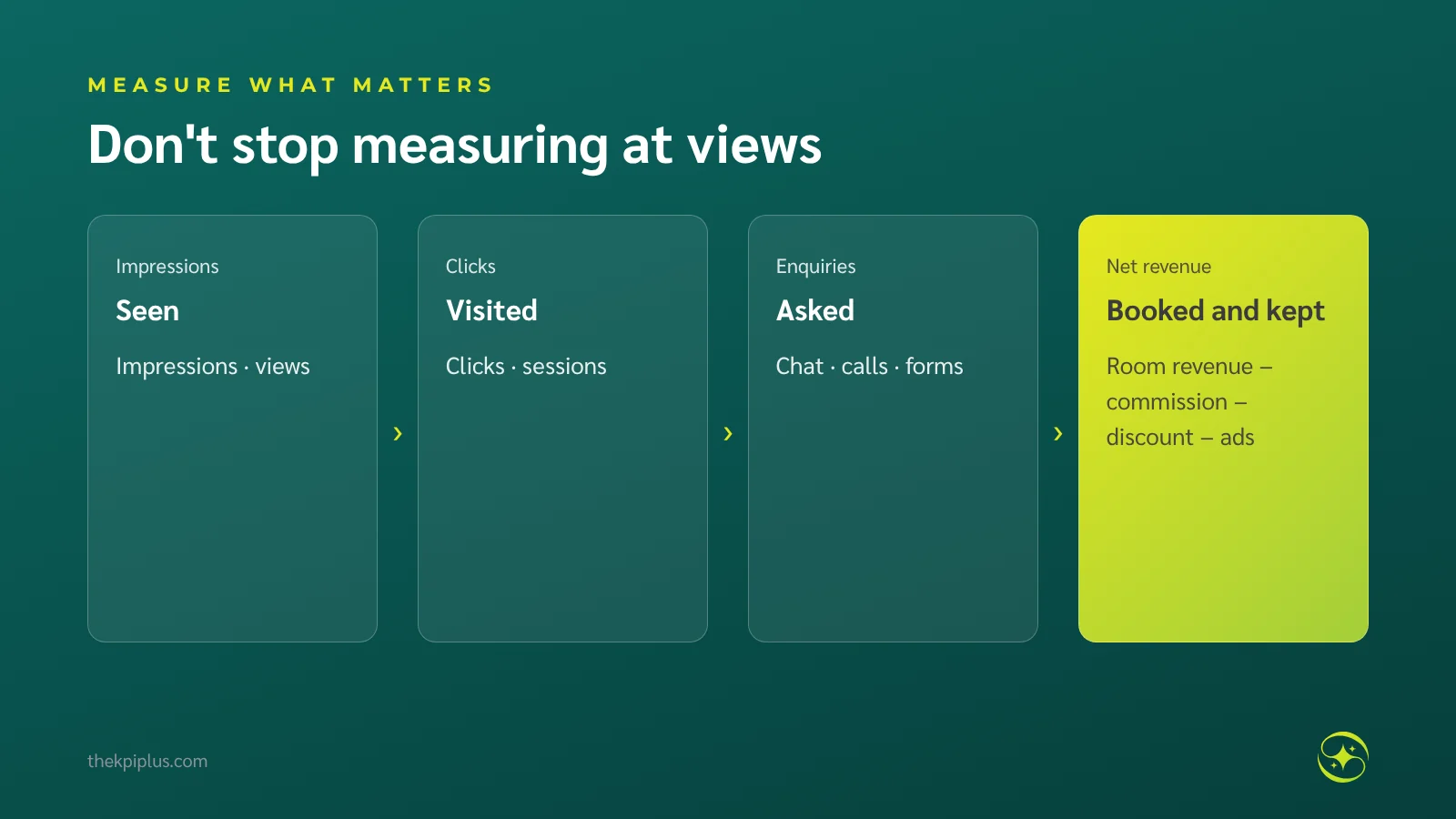
Views and clicks show that people saw you, not what the hotel gained. Decide with bookings, achieved rates and revenue left after commission, discounts and ad spend, by channel.
| Number | Question it answers |
|---|---|
| Occupancy and room nights | How many nights did we sell, on the dates we wanted? |
| ADR | Did we sell at the right price, or trade price for volume? |
| RevPAR | How much revenue did all available rooms generate? |
| Direct booking share | Are we too dependent on OTAs? |
| Cost of sale per booking | What does each channel cost, including commission and ads? |
| Net revenue by channel | Which channel leaves the hotel the most? |
How to keep these hotel marketing ideas going
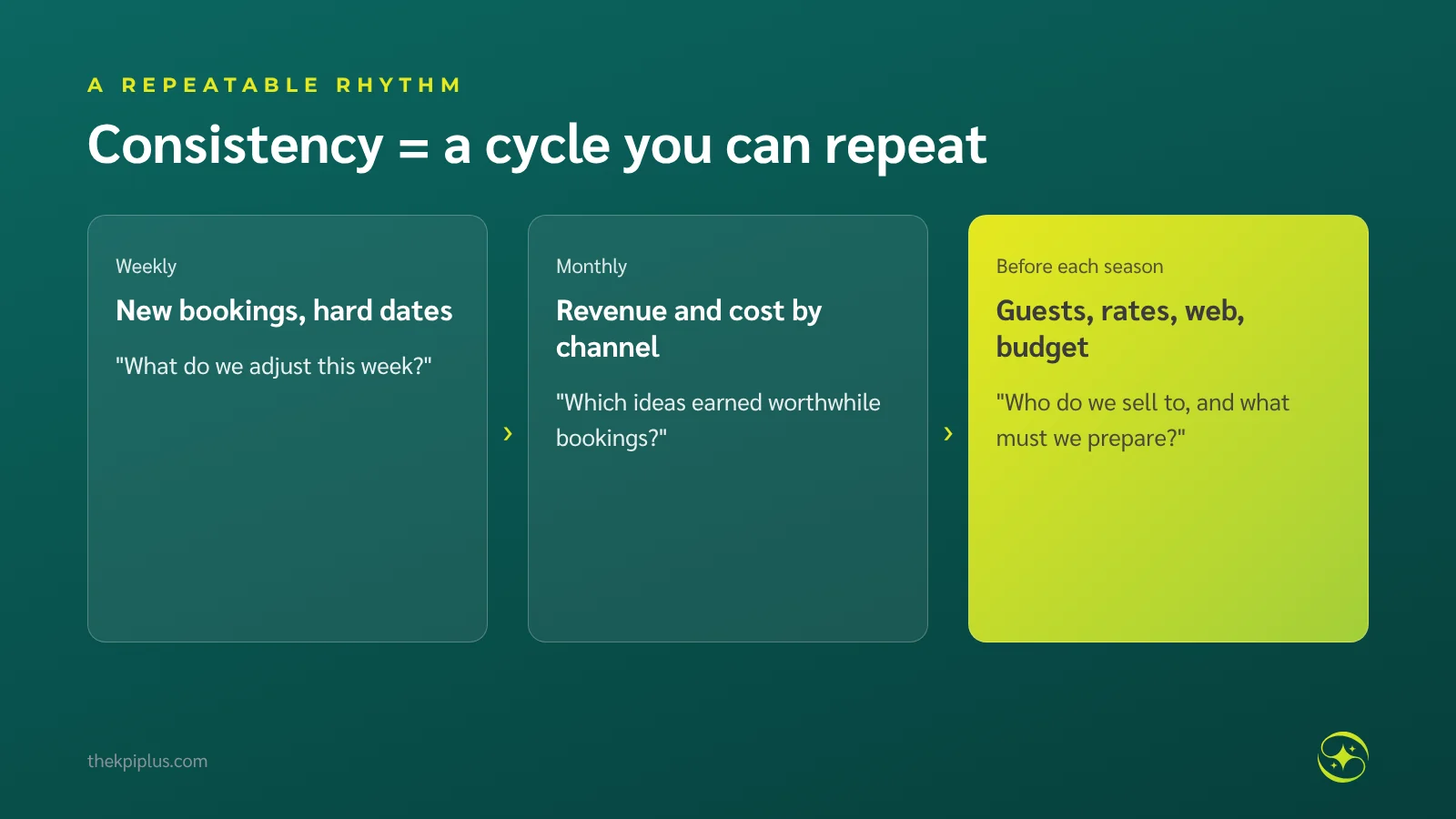
Consistency doesn't mean posting daily or running promotions non-stop. It means short work cycles you can repeat.
| Cycle | What to do | Question to answer |
|---|---|---|
| Weekly | Review new bookings, hard-to-sell dates and guest questions | What should we adjust this week — price, offer, content or channel? |
| Monthly | Compare bookings, revenue and cost by channel | Which ideas earned worthwhile bookings, and which need changing? |
| Before each season | Review guest segments, rates, website content and budget | Who will we sell to, and what must we prepare? |
Right now is the "before each season" moment. Before year-end high season, check your information on every channel, confirm booking tracking works, and decide in advance not to sell peak dates too early at too low a rate.
With limited resources, get your hotel information and booking path right first, then choose between content, ads or promotions based on the real problem. Doing one idea in a measurable way makes the next decision easier than doing many at once.
Frequently asked questions
Which of these hotel marketing ideas should a small hotel start with?
Start by making your hotel information, photos, rates and booking path consistent across your website, Google and OTAs. Then look at which nights or room types are hard to sell, and choose the one or two ideas that address that problem most directly.
Do we have to spend on advertising for marketing to work?
Not always. Accurate information, reviews, fast replies and an easy-to-book website all drive bookings too. Start advertising once you know which dates you need to sell, to whom, and can track bookings back to the ads.
Google now lets people book hotels in AI Mode. What should Thai hotels do?
As of late 2026 the feature is available to US users and works mainly with large chains and OTAs. What Thai hotels can do now is keep information on the website, Google Business Profile and sales channels accurate and consistent, answer pre-booking questions clearly, and look after reviews.
How long should we wait before measuring results?
It depends on the idea and how far ahead guests book. Ads and promotions can be tracked during the campaign; content and SEO need several months. Set the evaluation window before you start and compare with a similar period.
Summary
These seven hotel marketing ideas work when they start from a clear goal, run at a scale your team can sustain, and are measured through to bookings, rates, channel cost and net revenue. In late 2026 — with flat international demand, shorter visa-free stays and hotel search moving into AI — doing fewer things well beats doing everything.
To connect marketing with pricing and channels, see revenue and commercial management or Google Ads management for hotels. To find where your hotel is missing bookings, request a Hotel Performance Audit with The KPI Plus.
Related reading: 10 Hotel Marketing Strategies and Increase Hotel Bookings from Google.